University of Glasgow event examines how to make public service reform stick in Scotland
Published: 13 March 2026
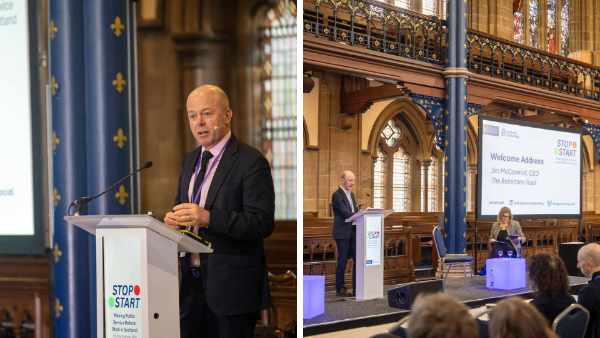
13 March 2026: The University’s Centre for Public Policy brought together the research and policy communities, and speakers from across civic Scotland, for an all-day event on 19 January 2026, focused on how to make public service reform stick in Scotland.
13 March 2026: The University’s Centre for Public Policy brought together the research and policy communities, and speakers from across civic Scotland, for an all-day event on 19 January 2026, focused on how to make public service reform stick in Scotland.
The event brought together speakers and an audience from across the research, policy, and political communities, to discuss how we can work collaboratively, against the current economic backdrop, to make public service reform stick in Scotland.
It challenged contributors and the audience alike to think about what the country should stop doing, to free up investment to spend in other areas. It asked them to consider what has worked and what hasn’t, and what should be prioritised to better tackle the challenges faced by communities today, such as poverty, homelessness, and access to healthcare.
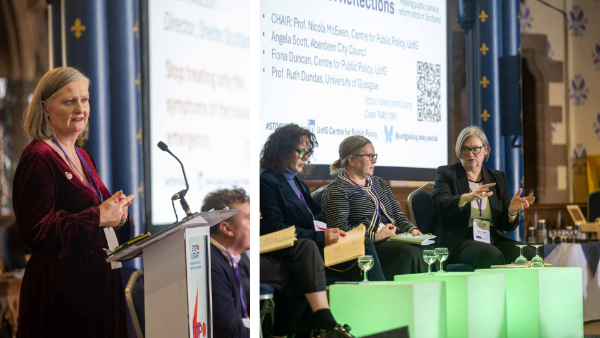
In a keynote address, Professor Nicola McEwen, Director of the Centre for Public Policy urged governments to find new ways of working collaboratively on a bigger scale than we’ve seen to date, to tackle the ‘extremely challenging fiscal and policy challenges’ ahead.
Professor McEwen, who is a leading expert in governance, intergovernmental relations and devolution, focused on key issues of poverty and population health.
Nicola said: “If we really want to address poverty at its root, or deliver population health, it needs more than new frameworks and new initiatives led principally by one department.
“It means putting these challenges at the heart of absolutely everything that government does - from housing to health care, education, the environment, economic development, criminal justice. Everything must be designed to ensure it reduces and doesn’t exacerbate poverty and promotes rather than harms population health.”
Read Professor McEwen’s full reflections on how this election in Scotland will be a reset opportunity for the country, to reflect on what has and hasn’t been working:
Blog: Whatever its outcome, the election is a reset moment for Scotland
Keynotes and discussion
The event featured a keynote address from Joe Griffin, Permanent Secretary to the Scottish Government who framed the day with the government’s perspective on public service reform.
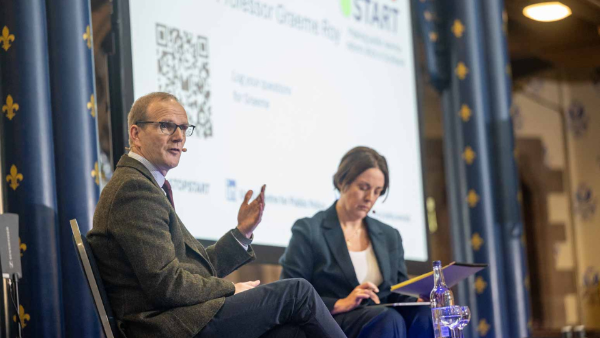
A presentation and Q&A with Graeme Roy, Professor of Economics at the University of Glasgow and Chair of the Scottish Fiscal Commission outlined the challenging fiscal outlook facing Scotland.
View Professor Graeme Roy's slides: Professor Graeme Roy - Stop Start event slides
What we’ve learnt from the evidence and from people experiencing poverty about how to prevent and reduce it was the key issue highlighted in the opening remarks by Jim McCormick, Chief Executive of The Robertson Trust, a funding body that works on poverty reduction and trauma across Scotland.
Watch: Learn more about the event
Lightning talk blogs
The second part of the day was driven by a series of lightning talks and response panels on what Scotland should stop and what it should start, sharing examples of what is working in public services (and what isn’t).
You can read a selection of these quick-fire provocations from leaders across civic Scotland on the Centre website:
- Stop/Start Lightning Talk: ‘Stop Right There – Thank You Very Much!’, Ross Martin, Scotland Inclusive Growth
- Stop/Start Lightning Talk: Measuring What Matters, Adam Lang, Director of Policy at Carnegie UK
- Stop/Start Lightning Talk: Scotland’s housing crisis, Alison Watson, Director of Shelter Scotland
- Stop/Start Lightning Talk: Start using floor targets to tackle unequal outcomes, Professor Annette Hastings, University of Glagsow
- Stop/Start Lightning Talk: Stop Waiting for Schools to Close the Attainment Gap, Fiona McFarlane, Policy Advisor, NESTA Scotland
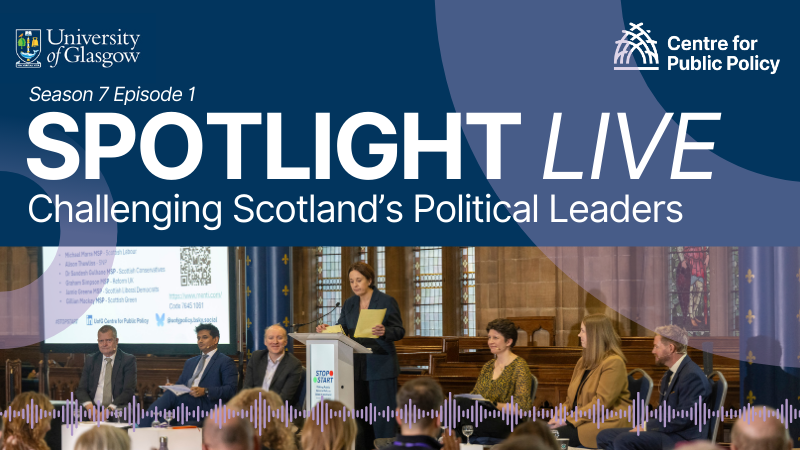
Listen to UofG Spotlight LIVE: Challenging Scotland’s Political Leaders
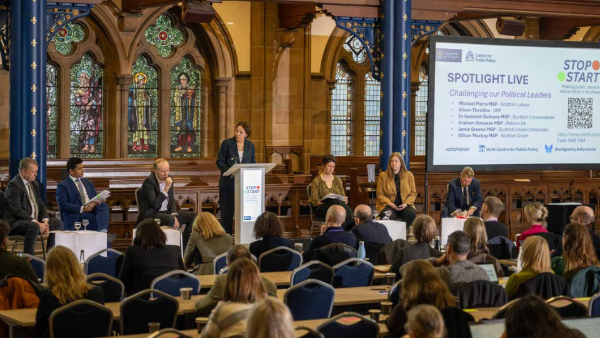
To close the day, Professor Kezia Dugdale, Associate Director of the Centre for Public Policy chaired a political panel, featuring Michael Marra MSP (Scottish Labour); Alison Thewliss (SNP); Dr Sandesh Gulhane MSP (Scottish Conservatives); Graham Simpson MSP (Reform UK); Jamie Greene MSP (Scottish Liberal Democrats); Gillian Mackay MSP (Scottish Greens).
Kez quizzed the panel about whether politicians can work together to deliver for Scotland, the fiscal challenge facing Scotland, prevention, the future of the NHS, devolution, and more.
The panel was recorded live and you can listen to it on the Centre’s UofG Spotlight podcast.
The State of Poverty research
The Centre for Public Policy is tackling some of the themes discussed at this event through its Roberston Trust-funded research project, The State of Poverty.
The project seeks to understand the impact of siloed decision-making on people living with poverty and use an innovative policy lab approach to drive solutions.
A report will be published from this work in summer of 2026. In the meantime, learn more about project and read the outputs so far.
First published: 13 March 2026
Read Professor Nicola McEwen blog:
Whatever its outcome, the election is a reset moment for Scotland
UofG Spotlight podcast: Challenging Scotland's Political Leaders
Listen to the live recording of the political panel on the UofG Spotlight podcast:
Challenging Scotland's Political Leaders