

In conversation: Pulling together
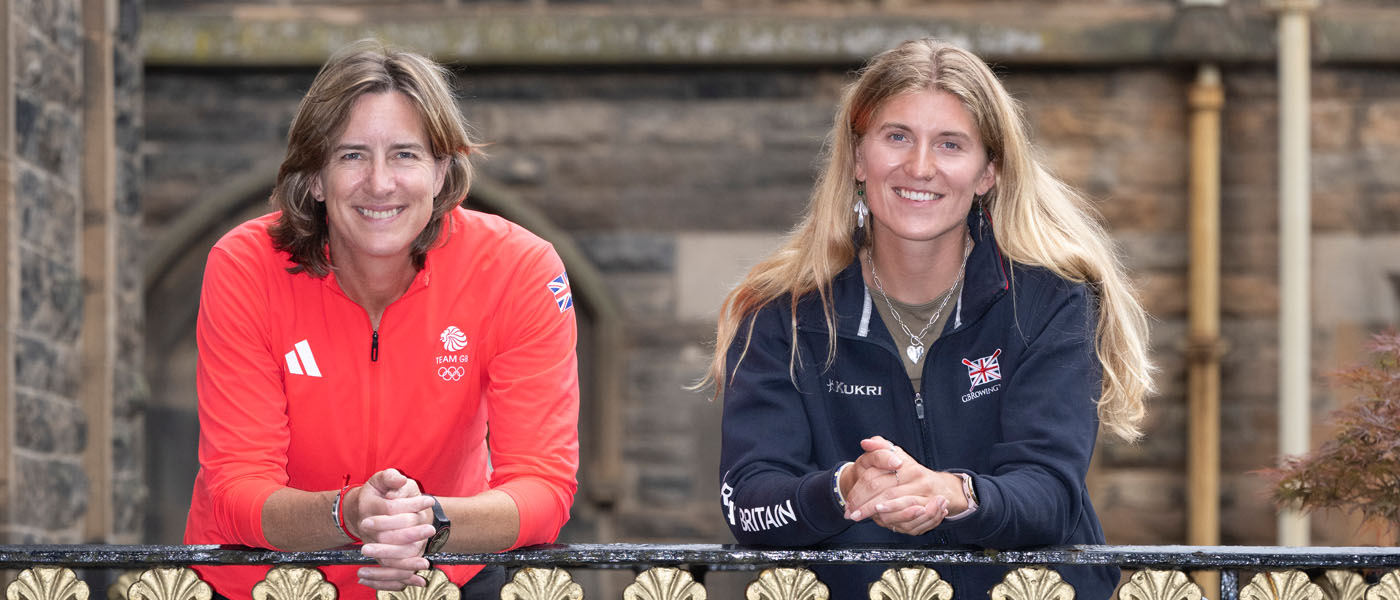
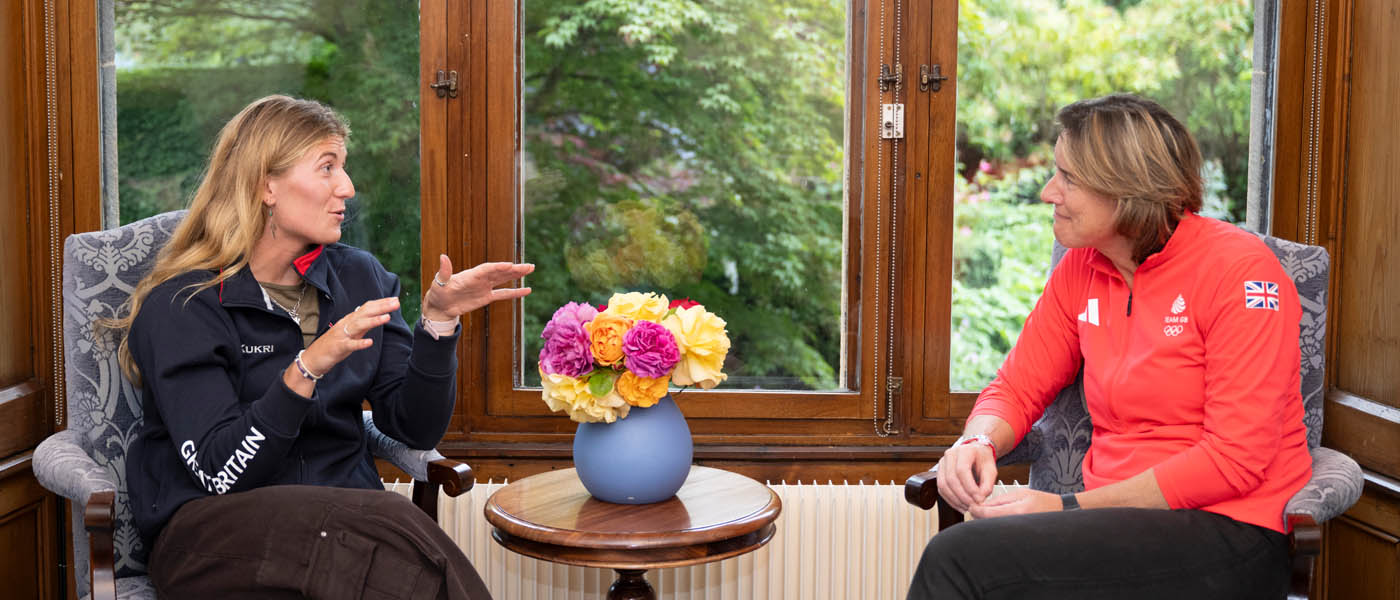
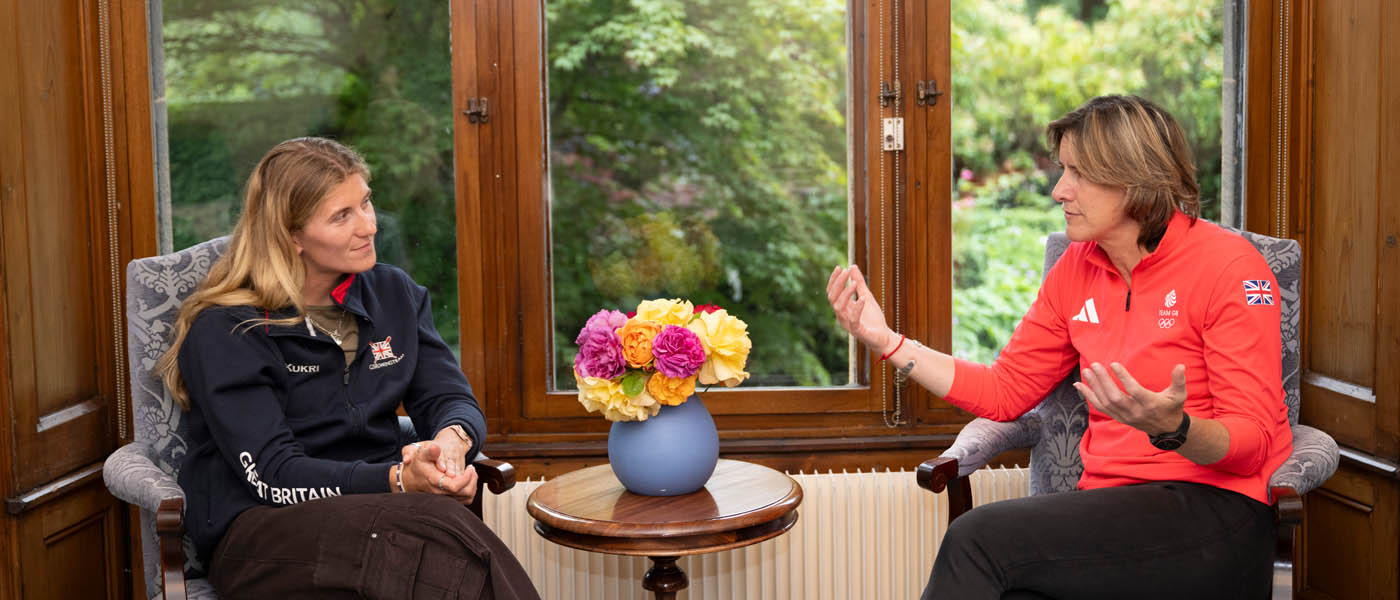
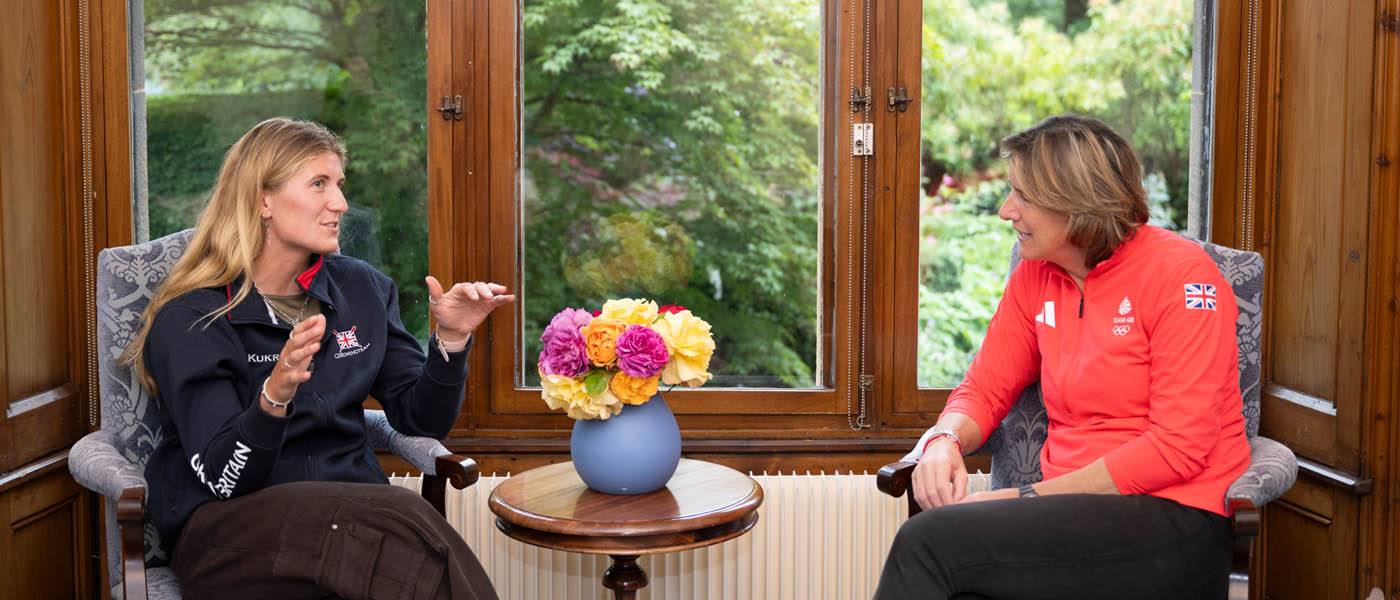
UofG Chancellor Dame Katherine Grainger (MPhil 2001) is a five-time Olympic medal-winning rower, with the pinnacle of her career being a gold medal at the London 2012 Olympics. Katherine spoke to fellow rower and current PhD student Laura McKenzie (BEng 2024) about their shared sport. Laura is making great strides in the new rowing discipline of beach sprints – a combination of rowing and running that will appear at the Olympic Games for the first time in Los Angeles in 2028.
LAURA: What was the first thing that made you think you could be really good at rowing?
KATHERINE: Well, rowing definitely wasn’t the plan at first. I was really sporty at school, loved being part of teams and when I went to uni, I’d just got my black belt in karate so I was thinking I’d do that. Then some of the best advice I got was to say yes to things, so I did the inevitable Freshers’ Week thing, signing up for lots of clubs and societies. I wasn't even tempted by rowing, but I was with somebody who signed up for it, and they persuaded me to have a go.
LAURA: I was similar to you. I played loads of sports when I was a kid, like badminton and gymnastics, and I went along to Loch Lomond Rowing Club when I was 15 or 16 purely because my sister was there. Then the coach said that because I was really tall – I was a good head above everybody else at that age – I should start rowing. I did a lot of athletics as well, but these environments could be quite brutal as a kid – whereas I found the rowing club to be a fun, friendly place which had a great 'team' feel and camaraderie about it, and I fell in love with the sport.
KATHERINE: Did that surprise you? For some people, there is a perception of maybe rowing being not for them, possibly because of the history and tradition it has, or they only know it through top universities racing. That's never been my experience – I've always seen it as really inclusive in a lot of ways. I first got into a rowing boat on the Clyde down at Glasgow Green and the rowing club was full of a brilliant range of people, with amazing levels of fun, energy and enthusiasm, and that's continued to be my experience throughout my career.
LAURA: Yeah, I've never been in this scenario where I thought it was very exclusive. Growing up, I hadn't heard many of the stereotypes. I was from the middle of nowhere, where nobody really rowed, so we didn't have these perceptions as much. I'm very grateful for the support I've received from Scottish Rowing and now British Rowing in terms of pathways, grants and funding.
KATHERINE: So I competed in the traditional 2000m distance, whereas beach sprints is deliberately different – shorter distance and fast turns. Is the actual training very different too?
"We all love the sport and we'll all go – hopefully! – to the Olympics, and show off how good beach sprints is. No matter what the result is, everybody's just going to be so excited to be there at its Olympic debut.'' Laura
LAURA: It’s pretty different to what yours would have been – we do around 16 sessions a week, but it's very flexible, so I’m able to fit uni, family and friends around it ... I feel very lucky for that. Our winter training is similar in that we're on the erg [indoor rowing machine] a lot, on the water a lot, just doing miles in normal boats ... do you think you would have given beach sprints a go if it had been around when you were rowing?
KATHERINE: Yeah, I think it's a really good addition to the programme. I’ve loved rowing for a very long time, but I would say it's not the easiest spectator sport! You sit at one end of the grandstand on a 2000m course and watch a screen for most of the time. But with beach sprints, it's shorter, more dynamic – it’s like the new, exciting younger sibling of the rowing family. And of all places to start, the LA Games seems obvious; I can’t wait to see it in LA. How much are you thinking Olympics at this point?
LAURA: This last year I’ve been thinking, if I don't make the Olympics, I'm going to be really upset. I’ve felt like every race I'm getting better. I always liked rowing with somebody else, but I got the bug for doing the solo – a big part of beach sprints is that you've got to make really split-second decisions all the time, and that's harder when there's two people in a boat.
KATHERINE: I loved that responsibility, when you're with somebody else, of not letting them down and having to bring your A-game – so if your natural instinct is to be a team player, how do you create that when you're solo?
LAURA: I would say it's the people around me like the coaches, the physiologists – you feel that’s your team. Also, being around my family is a huge support off the water. I do try to train with people as much as I can, and I love the beach sprint community. Obviously, everyone wants to beat each other – I don’t have to explain that to you! – but as soon as the race is over, everybody's shaking hands, hugging, congratulating each other.
Laura recently received support from the University's Chancellor's Fund to purchase a new boat. The Fund, overseen by an advisory board comprising senior University leaders, alumni, donors and student representatives, provides funding for projects that enhance the student experience and support the University community, particularly initiatives with the potential for significant impact that may otherwise struggle to secure funding.
KATHERINE: Well, you've got a new boat now.
LAURA: It's in the making! I've been rowing for ten years and never actually owned a boat – I managed to get by just by borrowing them until now. I looked at whether there was any sort of funding available within the University and I suggested that if they could help me out financially to buy a boat, then, after however many years, I can gift it back to the GU Boat Club and they'll have a great boat that can help other people coming through the system. So I decided to put in an application to the Chancellor’s Fund. This will make a huge difference to my training in the run-up to the Olympics.
KATHERINE: If I was still at uni, sitting in a boat that had belonged to someone who had gone on to compete for their country or at the Olympics ... you can't help feeling there’s a bit of magic in it!
LAURA: Yes – and when you got to that level yourself and started losing your anonymity a little bit, how did you cope with that?
KATHERINE: In a nice way, rowing's not a sport that's going to be headline news every day. I was part of a team that was very successful, but still quite under the radar. I think that suited me – I didn't want to be really well known. But London 2012 suddenly shifted the dial on that – for a while, all athletes were household names and people would stop you in the street to talk to you about the Olympics. What was special about that was realising the positive impact sporting events could have on so many lives.
LAURA: Did you get a golden post box?
KATHERINE: I did get a golden post box, in Aberdeen, which was amazing. The home Games brought some really special aspects to it like that – and the home crowd was incredible. But each Olympics is so different – they all have their own style and flavour, which is why I'm so excited about LA – I think it's going to be the biggest fusion we'll ever see of not just sport and technology, but also celebrity – it will be something totally new in itself.
LAURA: Just thinking about social media and sharing your story, there’s a lot of pressure on athletes now to have Instagram, to show off what they're doing and make little videos. Do you think if that had been around when you were doing sport, you would have found that natural, or difficult?
"I think the same mentality that makes you successful as an athlete is helpful in everything else that you do, because you have goals and want to try things that haven't been done before. So all the things that I loved about being an athlete, I probably bring into what I do now.'' Katherine
KATHERINE: Well, social media really took off during my career – now there's a whole new concept of building your own personal brand and the opportunities that come with that – you can have an amazing reach if you want it. But I think you've got to go with what's right for you; even now, I'm not huge at social media. I love following other people, as there is so much interesting and inspiring information out there, but I don't really feel the need to do a lot about me. If I’d been born 20 years later, maybe I'd be doing ‘A day in the life of Katherine Grainger’ – you’d be so bored of me by now!
LAURA: At the end of the day, being an athlete is not very exciting half the time. People think it's something really glamorous and then they're just like, "Why are they doing exactly the same as last week?"
This feature was first published in June 2026.
A PIVOTAL MOMENT FOR LAURA
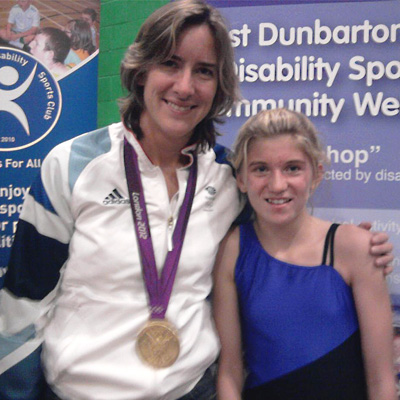
Image: Dumbarton Reporter
Shortly after winning her gold medal at the 2012 London Olympic Games, Katherine visited a leisure centre near Glasgow where she met an 11-year-old Laura – in those days, Laura took part in sports like gymnastics and rowing was not even on her radar. Laura remembers the visit as 'inspirational'!