

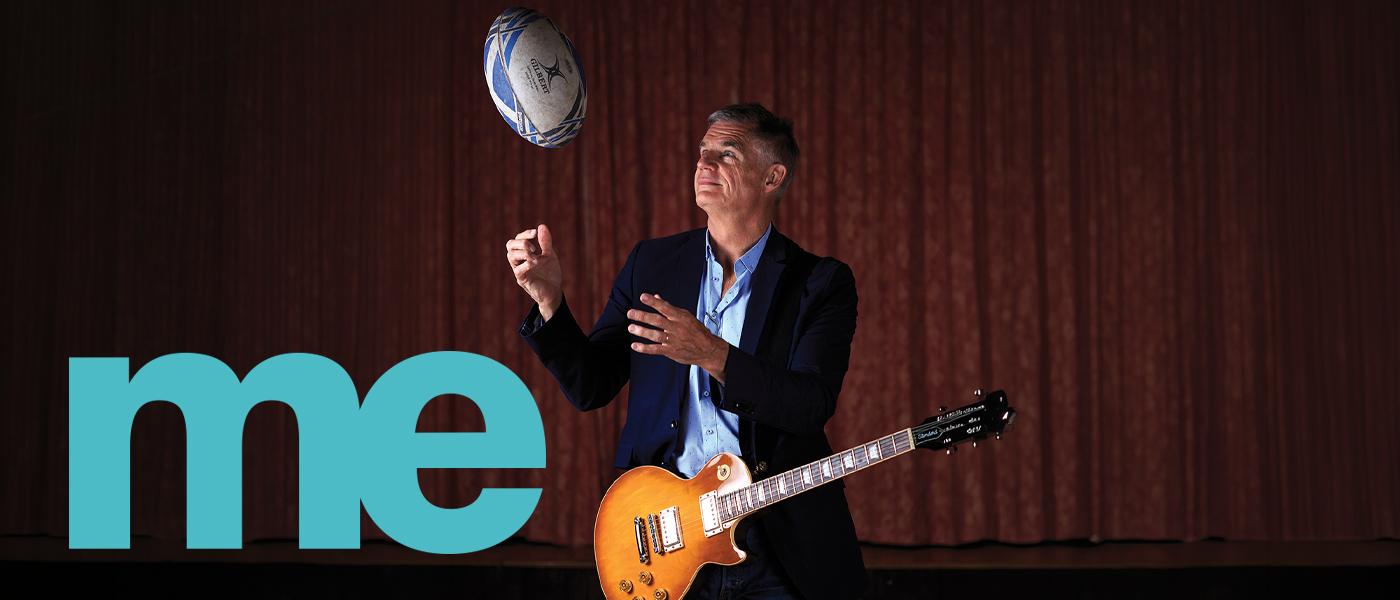
Me by John Beattie
Former international rugby player John Beattie (BSc 1980, DUniv 2016) has had more careers than most. After his years playing for Scotland, he ploughed furrows in civil engineering and chartered accountancy before moving into the media – radio and television broadcasting as well as writing for newspapers – and has been a regular face on BBC Scotland’s evening news programmes.
You lived in Malaysia until you were 11 – what memories from those years have stayed with you most vividly, and how much did that childhood shape you?
My dad was a rubber estate manager, so I was born out there. I really loved being in the jungle. I went to a brilliant school on the island of Penang – a multiracial school based around fairness, learning and physical activity. A different education; they used to take us out at night to look at the stars and name the planets. It was paradise; Malaysia completely moulded me.
You were building a career in civil engineering at the same time as playing international rugby – how did you make that work without burning out?
I *did* burn out – I was trying to juggle work on a site from 8am till 6pm, building things like the Edinburgh City Bypass, with training every Wednesday night in Glasgow, every Sunday through at Murrayfield [in Edinburgh], and playing on a Saturday. Your whole world was built around training, trying to do weightlifting, extra sessions ... so we did burn out. I got sent home a few times.
Which match is up there at the top of your ‘best rugby memories’ list?
The obvious thing is my first cap for Scotland – just being given a blue jersey – but I think the best day was beating England by a record score, 33–6, in 1986. It's funny, you feel like king of the world when you win. You beat the team, go out at night time and everybody wants to talk to you.
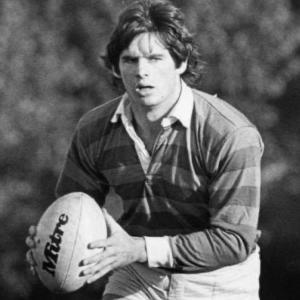 "My headmaster said, “You're the roughest boy we've ever had at the school. One day you might play rugby for Scotland.”
You’ve reinvented yourself several times, moving from civil engineering to rugby to chartered accountancy, then to writing and broadcasting – what keeps pulling you towards the next challenge?
I quit my job as an engineer when I got hurt at Twickenham [England’s national rugby ground] before the first Rugby World Cup. I was lying in the tunnel, I'd been carried off, and I said to the team doctor, “Will I make the World Cup?” It was four weeks away. He said, “Can I put it this way ... would you like a cigarette?” My leg was operated on on Monday, and then I thought, right, I'll try and retrain as a chartered accountant. Soon enough, I was doing five or six things. I was writing, broadcasting, hosting radio programmes and doing some television presenting.
"I was studying most nights, writing every night, broadcasting on Saturday and Sunday. I probably burnt out a couple of times – but you’re trying to make money for your family. It’s not a bad example to kids to give them parents who work hard.”
You once said: “If there’s a big story breaking, you’ll only get it on live radio.” What’s been the biggest or most exciting story you’ve had a hand in breaking?
I was involved in the Queen’s funeral, which I didn’t know about until half an hour beforehand. My favourite scoop was when the All Blacks [New Zealand rugby team] were saying they’d been poisoned by the Springboks [South African rugby team] in 1995. But a lot of the stories I broke, I can’t tell you about due to confidentiality. I was at a dinner once and somebody slipped an envelope into my jacket and said, “There’s a story in there.” And it was a huge story.
What were your hopes for the health of the country when you took the reins of the Scottish Government’s Physical Activity Task Force, and how much were these realised?
This was the first physical activity strategy in the world, and I thought it was going to be all about getting more people to do sport. But actually, the biggest step change you can make to a population is getting somebody who’s not walking to do a bit of walking; get the population to go from inactive to active. The trend had been downwards, and I think it’s now stable.
When it became clear that your children (rugby player Johnnie and footballer Jen) were going to follow in your footsteps and make their careers in sport, were you pleased about this or secretly concerned in any way?
They were active as children, but we deliberately didn’t push them. I was worried that they might be damaged by it, because it is very mentally demanding – being analysed, being dropped, being told you’re rubbish. It’s hard. But both of them did very well. In the end, I don’t care if they win medals, I just want them to come off the pitch safely.
You’ve said you’d be happy to leave your brain to medical science, partly because of concerns around the possible links between certain sports and long-term brain injury. Have these changed the way you now think about the sport you loved?
Rugby is actually more dangerous than football, even though you don't head the ball – it’s to do with the way your head moves. I made a [BBC] ‘Panorama’ programme on concussion and brain damage, and I was ostracised by rugby for it – called an ‘auld wummin’ by people in the upper echelons. I was convinced it was really bad for you and everyone was getting brain damage. But a couple of things Dr Willie Stewart* told me were: you’re better off having played rugby than not – heart health, friendships etc – you might get dementia six months earlier, but you’re going to be socially much more integrated, happier, and better at winning and losing.
*Dr Stewart is a UofG Honorary Professor who has dedicated his career to researching traumatic brain injuries caused by sports.
Your wife reports getting annoyed because you wake up happy each morning! What’s the secret to your optimism?
Having lived in Malaysia, I grew up seeing kids with polio, leprosy ... in the back of my head, I’ve always got a picture of a wee boy pulling himself along on rubber tyres in the jungle in Borneo. I’ve had a fun time as a rugby player; I’ve got kids and grandkids – what have I got to be unhappy about? I used to get the kids to hold hands every teatime and say how lucky we all were. Every teatime! We’re so lucky.
How do you like spending your time outside work?
I play guitar in a function band – we play weddings, corporates, pubs. Also training, cycling – and grandchildren. That’s the best bit!
What’s your happiest memory?
Running on a deserted beach in Islay with my children and grandchildren, on a sunny day.
Where is your favourite place in the world?
Machair Bay, Islay – or the top of Penang Hill in Malaysia, where I went to school.
How would you spend the perfect day?
There would be competitions on the beach with all the kids and grandkids, then we’d have a huge meal together. Grandpa would have a pint of lager – just one – then a glass of red wine.
Memories of Glasgow
I came to UofG to study because my father had talked to people in the Scottish Development Agency who said there was going to be great infrastructure being built in Scotland, like the Edinburgh City Bypass and the Hydro, so I thought civil engineering would be a great trend. The University was close to where we lived and me and my brothers got full grants to come here.
Diligent student? No – but I loved learning, I always have. The first meeting I had with my tutor, he told me I was expected to do between two and a half and three hours of studying every night. I nearly fell off my chair! I was training Tuesday, Wednesday, Thursday, playing on Saturday, squad session somewhere on a Sunday. I knew I couldn’t do it. I failed second year. In the end, I got to the honours class, but couldn’t do the exams as I had to go on a Lions tour to South Africa.
I’ve never been a big drinker, but I liked the GUU as it’s good for socialising. I went to the QM when there were bands on at the weekends, and I loved hanging out at the swimming pool and gym in the Stevenson Building – it was really good value and the classes were free.
When I wasn't studying, I enjoyed driving my granny's Hillman Avenger around Ayrshire, or hanging out with friends – but mostly rugby training.
John is officially ‘retired’ from broadcasting work at BBC Scotland, though still covers several programmes each month. In the next few years, he would like to do some volunteering, such as mentoring children through a charity like MCR Pathways. And, having loved travelling since he was a young boy, John has plans to combine two passions and cycle around Europe in the near future.
This feature was first published in June 2026.
QUICKFIRE
Biggest hero
Mighty Mouse McLauchlan and Broon from Troon [Scottish international rugby players of the late ‘60s and early ‘70s]
Greatest challenge
Passing my chartered accountancy exams
Biggest extravagance
Nine-gauge Elixir guitar strings
Guilty pleasure
A quiet single malt late at night
Most treasured possession
My 1989 Gibson Les Paul guitar