Healthy & Equitable Futures Catalyst (Phases 1 & 2)
The Healthy and Equitable Futures (HEF) Catalyst was launched in the summer of 2025 to create a unique space for first imagining visions of a healthy and equitable future and then co-designing activities and solutions that would contribute to these futures across disciplines, sectors, groups, and organisations. This initiative aims to reveal new areas of strategic focus and establish long-term resilience and preparedness for societal and environmental threats to healthier, fairer futures. The HEF Catalyst process was designed by Glasgow Changing Futures and the Arts & Humanities Partnership Catalyst (hereby referred to as the Catalyst) in collaboration with the Glasgow School of Art and futures consultants ‘And Then’. It has been co-created as an innovative, design-led journey underpinned by Futures Thinking methodologies and designed to enable interdisciplinary and cross-sectoral conversations that generate new ideas.
The HEF Catalyst set out to bring together contributors across all university disciplines, directorates, and job families, as well as external partners from public, third, and private sectors. It recognises that all forms of experience and expertise are required to explore what healthier and more equitable futures could look like and effectively identify what we must change now to realise them.
By 2050, health and health inequalities will be shaped by evolving global power structures, economic and social transitions, climate change, and disruptive technological developments. Solutions to the biggest societal challenges, including ensuring a healthy and equitable future, therefore, require novel, systemic, and forward‑looking approaches.
The HEF Catalyst’s starting point is to acknowledge that health is shaped by many systems, not just the health sector. Equity, in a holistic sense, must be a focus of any future approaches. To ask new questions and work towards innovative solutions, the HEF Catalyst has stepped outside of disciplinary and sectoral boundaries to enable collaboration between unconventional combinations of people, bringing together different forms of knowledge to challenge norms and expectations.
Goals
The HEF Catalyst enables all participants to contribute ideas, regardless of background or job role. The goal is to generate collaborative propositions in research, partnerships, and institutional practice and identify opportunities for collaboration between internal and external participants. External stakeholders are invited to enrich thinking, challenge assumptions, and co-create solutions that ensure the University’s priorities are aligned with external needs.
The HEF Catalyst enables all participants to contribute ideas, regardless of background or job role. The goal is to generate collaborative propositions in research, partnerships, and institutional practice and identify opportunities for collaboration between internal and external participants. External stakeholders are invited to enrich thinking, challenge assumptions, and co-create solutions that ensure the University’s priorities are aligned with external needs.
The process is designed to enable and support ambitious, novel approaches, including interdisciplinary research, partnership building, and initiatives that extend across and beyond the University. Through the application of futures-led thinking, the HEF Catalyst ensures that future generations are stakeholders of work carried out in the present.
When the process concludes after a third consolidation phase, there will be opportunities to apply for seed funding from Glasgow Changing Futures to support further development of ideas and collaborations. Seed funding will establish a pathway for collaborators to work towards securing larger investments from external sources.
Method
The HEF Catalyst utilises existing design-led knowledge mobilisation processes developed by the Catalyst in conjunction with the School of Innovation and Technology, GSA, within the University of Glasgow’s College of Arts and Humanities (the Catalyst) that reshape how universities engage with external partners and communities. For Healthy and Equitable Futures, the process has been specifically redesigned to devise new opportunities for interdisciplinary challenge-led projects and form new collaborations with new and existing partner organisations.
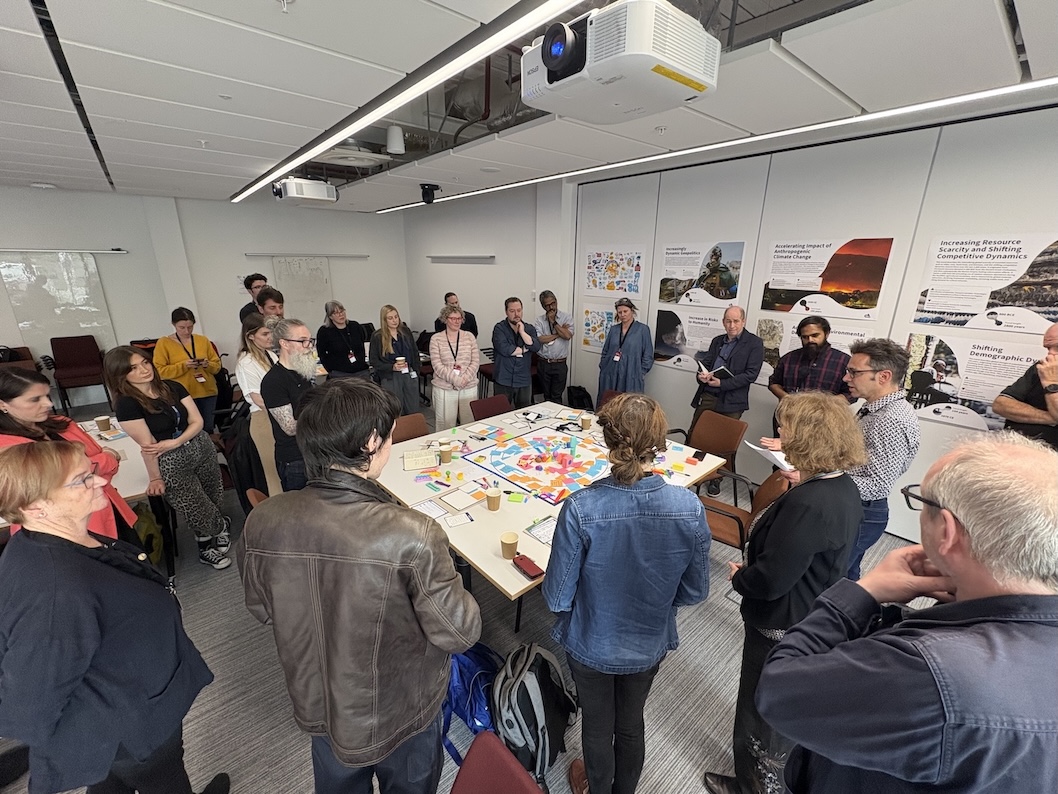
The HEF Catalyst comprises a series of design-led workshops that encourage imaginative and future‑focused thinking. The series opened in the summer with workshops aimed at the University community: 116 colleagues participated in 8 workshops. Workshops with external partners followed in autumn with 43 participants from organisations with an interest in Healthy and Equitable Futures.
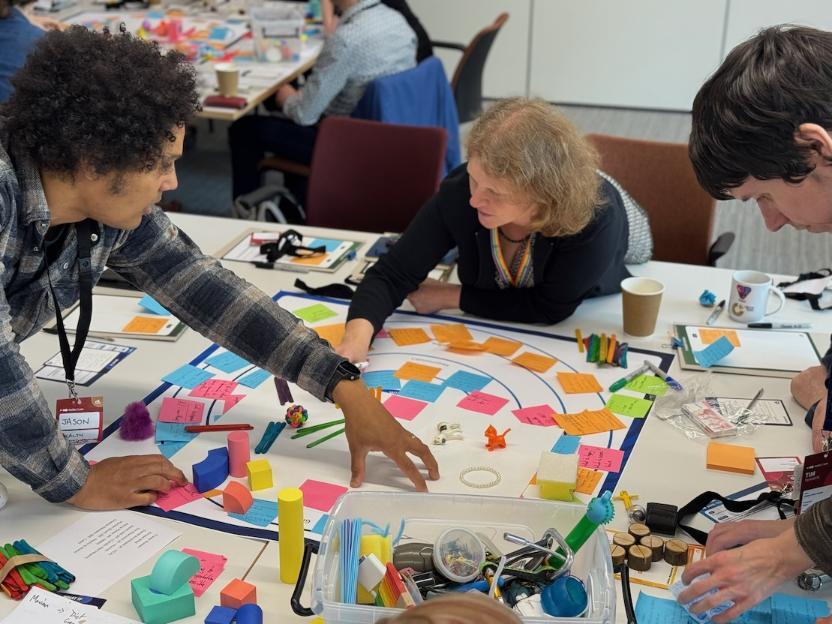
In the workshops, participants explored how “mega trends” - shifting power structures brought about by geopolitical instability, climate crisis, and AI-driven technological change - might shape health equity. They also considered “emerging trends”, before undertaking a series of innovative activities that work from the “Probable Future”, through the “Possible Future”, and finally identifying the conditions required for a “Preferred Future”. The activities are designed to take participants out of their regular patterns of thinking, challenge them to think creatively, and ultimately unlock new ways of thinking about healthy and equitable futures and the steps required to get there.
By the end of each workshop across Phases 1 and 2, participants developed propositions for preferred futures that unpack the vision, required activities and intended impacts that could enable meaningful change. These propositions spanned new product design, shifting cultural values, institutional structure changes, and reimagined health infrastructures, demonstrating the breadth and depth of new ideas that can be generated by innovative collaboration. 47 propositions were generated in Phase 1, later synthesised into thematic clusters. Phase 2 workshops produced 21 propositions, which were also synthesised and then consolidated with the internal insights of Phase 1 to lay the groundwork for Phase 3. All propositions provide a bank of ideas that are clustered into themes that demonstrate the common concerns and concepts of participants.
Next steps
In Phase 3 participants from the first two phases will be invited to join thematic workshops that align with their interest and expertise. They will self-select to form new, collaborative groups. This will provide an opportunity to explore new angles and combine the expertise of a wider range of contributors.
The workshops for Phase 3 are as follows:
A: Democratic Power & Institutional Legitimacy Systems
Designing how Authority, Capital, and Representation are structured in Healthy and Equitable Futures
B: Provision Systems (Life Infrastructure)
Designing the Physical and Environmental Systems that Quietly Shape Health, Equity, and Everyday Life
C: Collaborative Place & Community Systems
Designing the Relational and Civic Infrastructures Required for Shared Agency
D: Human Capacity Systems
Designing the Internal Capabilities Required to Thrive in Structurally Unstable Futures
E: Cultural & Narrative Systems
Designing the Meaning-Making Infrastructures That Grant or Withhold Cultural Permission
F: Reflexive, Participatory & Knowledge Infrastructures
Designing the Listening, Learning & Legitimacy Systems Required for Democratic Futures
Outcomes so far
In Phases 1 and 2 of the HEF Catalyst, University participants came from every college, professional services, and a wide range of backgrounds - including many people who do not typically work on health topics. External stakeholder workshops brought new perspectives from government, public health, charities, and business.
This diversity of expertise resulted in novel and unexpected ideas, but there was also a welcome overlap in the ideas that emerged from university staff and external stakeholder groups. Equity themes emerged in relation to good stewardship and the ways in which we approach common goods and shared services. Participants called for the involvement of people with lived experience of exclusion or disadvantage in designing future systems. Future needs will differ from present needs, and participants urged a focus on intergenerational fairness. Many realised just how broadly health is shaped by societal systems, leading to an expanded understanding of what “creating health” entails.
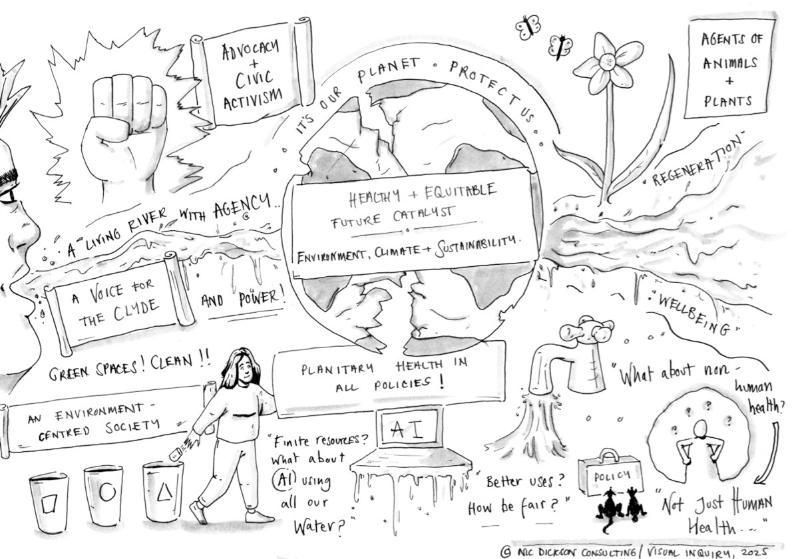
Insights from Phase 1 workshops, by Nic Dickson
The insights from the workshops were presented using the artistic interpretation to help communicate complex ideas. Following the workshops, an exhibition exploring the ideas emerging from Phase 1 workshops was on display in the Byres Community Hub. It presented a selection of “mega trends” expected to affect future health equity, alongside explorations of solution spaces developed throughout the workshops, illustrated by researcher and artist Nic Dickson.
The first two phases of the HEF Catalyst have built momentum toward forming new collaborative partnerships and developing proposals for future funding.
Key lessons learned
- Bringing together an unexpected blend of participants sparks innovative thinking.
- Designing preferred futures must consider global political instability, technological shifts, and the wellbeing of future generations.
- Health is everywhere: you do not need ‘health’ in your job title to understand health implications.
- Equity must be foundational in designing future systems, services, and policies.
- Meaningful solutions require co‑production with individuals and communities most affected by health inequity.
- Creative, design-led methods help participants think beyond current constraints.