

Pedagogy to Support Attainment in Diverse Classrooms
Support for Diverse Classrooms
Leigh Bjorkvoll
Colin Christie
Matthew Clarke
Catriona MacDonald
Charlaine Simpson
University of Aberdeen
Suggested citation:
L. Bjorkvoll, Christie, C., Clarke, M., MacDonald, C. & Simpson, C. (2026, January 28). Support for Diverse Classrooms [Research brief]. Centre for Teaching Excellence, University of Glasgow
Acknowledgements
Shannon Babbie, Andy Crawford, John Duff, Terpsichori Kaltsouni, Catriona MacDonald, Amy Mcfarlane, Steph O’Reilly, Vicky Simpson, Kate Smith.
Contains public sector information licensed under the Open Government Licence v3.0.
Overview of Themes
The Support for Diverse Classrooms Hub will utilise digital spaces to maximise national reach and impact. The themes identified as in scope for the Support for Diverse Classrooms hub are overlapping and interdependent, these are
- nurturing relationships and promoting positive behaviour;
- promoting inclusive pedagogies;
- thriving through diversity:
- developing counselling skills to support relationships and attainment
- supporting mental health and wellbeing for learners and educators
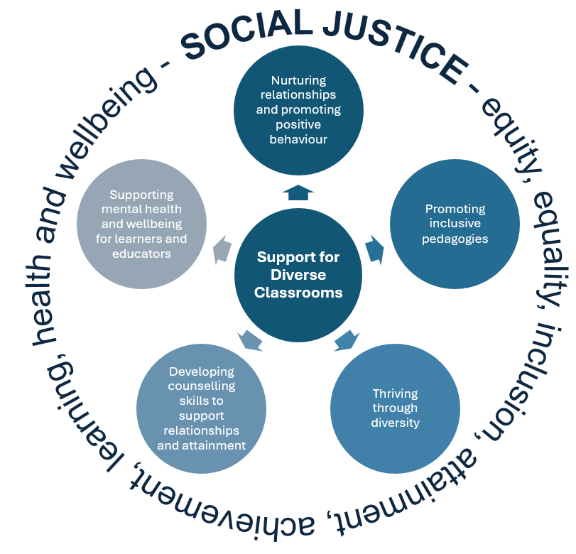
Figure 1: The key interdependent themes that are within scope
The scope of each theme is outlined below:
- Nurturing Relationships and Promoting Positive Behaviour
- Nurturing relationships and promoting positive behaviour is premised on building rapport and understanding context. To support educators to enhance their practice, we will share good examples from practice making these visible and usable, to show what this looks and sounds like, from contexts across Scotland. Over time, initial ‘marginal gains’ aim to support cumulative growth within virtuous cycles of improvement. This can help strengthen relationships within learning environments, supporting behaviour regulation and improving the overall climate for learning.
- Promoting Inclusive Pedagogies
- Inclusive pedagogies equip educators with high impact, socially just practice that ensures every learner has their needs met, helping them to thrive. We will provide educators with evidence informed approaches and access to professional networks that help develop and share good examples of practice.
- Thriving through Diversity
- Scotland as a nation is dynamic and diverse; as educators we embrace our ethical, moral and legislative commitment to embed the United Nations Convention on the Rights of the Child (UNCRC) in practice. Through developing networks of inclusive pedagogical practice and creating nurturing learning environments, we will support educators’ development so that all learners are helped to thrive. This moves inclusive practice beyond “integration” and transforms classrooms into places where diversity is not merely accommodated but actively drives success.
- Developing Counselling Skills to Support Relationships
- Counselling means to engage in dialogue for the individual benefit of others. Developing counselling skills to support relationships is more than ‘learning to listen better’; it involves developing skills based on 'ways of doing’ and ‘ways of being’. We will help educators and practitioners explore how to create a supportive environment for learners and colleagues, enabling them to understand and express themselves as they navigate challenges, build emotional bonds, develop and grow.
- Supporting Mental Health and Wellbeing for Learners and Educators
- In an increasingly challenging environment, educators are called upon to sustain the mental health and wellbeing of students, and alongside this are requirements to respond appropriately to mental health challenges, which exist and emerge within educational contexts. Building on good evidence for wellbeing and positive outcomes being the result of respectful inclusive structures, positive relationships, and reciprocity, we will support educators to create and sustain communities of learners.
Definitions
Positive Relationships and Behaviour
The foundation of education is relationships, premised on a sense of belonging, underpinned by children’s rights and wellbeing. Belonging is fostered through respectful, trusted and supportive relationships, where children and young people have a sense of being seen, heard and valued, and where positive behaviour is supported by responses that are fair, proportionate and needs-based. This is strengthened by safe and consistent environments which are nurturing, relational and restorative.
Additional Support Needs
Supporting equitable education requires recognition that learning is not one-size-fits-all. Meeting children and young peoples’ needs ensures that any barriers, whether temporary or long-term, are met with responsiveness and care to help that person thrive. Identifying different support needs, the development of a range of strategies, and the provision of appropriate resources, are all essential to support all learners to access education.
Inclusion
Inclusion means giving every child and young person the opportunity to thrive. It is the proactive practice of ensuring that every individual feels they belong but more importantly they matter. Inclusion recognises and celebrates diversity and values the contribution of every individual. Inclusive practice which supports an individual group/s of learners benefits all learners.
Diversity
Embracing diversity means actively recognising, respecting and valuing differences in all forms. This requires embedding a social justice approach that ensures learners’ differences do not create or perpetuate disadvantage.
Neurodiversity
Neurodiversity encompasses the continuum of variability in human brains, that should be recognised so that children and young people are included and celebrated for their unique ways of learning and thinking, such as heightened pattern recognition or creative problem-solving, and learning.
Mental Health
Mental health is the emotional, psychological and social wellbeing of a person: it is influenced by physiological, relational, and environmental events, as part of daily life.
The World Health Organisation defines mental health as “a state of wellbeing in which the individual realises his or her own abilities, can cope with the normal stresses of life, can work productively and fruitfully, and is able to make a contribution to his or her community.” World Health Organisation (2025)
Counselling Skills
Counselling skills refer to the communication techniques that help promote a person’s emotional health and well-being. They can be used by practitioners whose primary role is not counselling, but who embed these skills in their everyday professional role.
Good examples of practice
Rather than promoting the notion of ‘best practice’, that suggests a context-free, singular and universal view of practice, and that positions educators as implementers of ‘what works’, we use the notion of ‘good examples of practice’ (Kelchtermans, 2015, 2021). This recognises the importance of context and multiplicity, and that treats educators as active professionals who critically reflect on practice to support their own and the growth of others.
Next Steps
Relevant legislation, policies and commitments in Scottish Education
There is already a range of legislation and policy associated with the key areas of focus for the Support for Diverse Classrooms Hub. Please see below some which may be of interest.
Legislation
Standards in Scotland’s Schools etc. Act 2000
Scottish Schools (Parental Involvement) Act 2006
Education (Additional Support for Learning) (Scotland) Act 2009
Children and Young People (Scotland) Act 2014
United Nations Convention on the Rights of the Child (Incorporation) (Scotland) Act 2024
Policy
Getting it right for every child (GIRFEC)
Developing a positive whole school ethos and culture: relationships, learning and behaviour
Additional support for learning: statutory guidance 2017
Presumption to provide education in a mainstream setting: guidance
Schools - improving relationships and behaviour: progress report 2025
Commitment
The National Framework for Inclusion
Research into Practice
Relationships
When considering relationships and behaviour in schools, it is helpful to peruse the policy context. The Improving Relationships and Behaviour in Schools: Ensuring Safe and Consistent Environments for all: Joint Action Plan 2024 – 2027, may help you to think about relationship and behaviour, and you may want to find out more about your local authority and learning context action plan.
Inclusive Practice
Review the infographic created from the key messages from Florian (2012) and Finkelstein, S., Sharma, U., & Furlonger, B. (2021), using LM Notebook.
Diversity
In their paper, Teacher Education and Teaching for Diversity: A Call to Action, Ryan et al. (2022, p. 202) discuss three ways of knowing about diversity:
- teaching about diversity, where educators need access to facts about forms of diversity and consequences of diversity.
- teaching to diversity, what educators need to know about diverse learners, and how they need to respond.
- teaching for diversity, the origins of equity, the operation of power, the ways in which differences are consistently made to matter and what education can do to address this.
This framing of diversity may be a helpful way to consider your own practice and the practice in your context or learning environment.
Counselling Skills:
In their article Stoll, M. & McLeod, J. (2020) explore the experiences of educators working with children and young people with mental health difficulties. They report that participants suggest that the use of a counselling skills framework was useful and helpful.
The British Association for Counselling and Psychotherapy has defined the competencies for counselling skills. They include professional context, empathy, skills and techniques, working alliance and personal qualities. The framework, offers a benchmark for educators who may find counselling skills helpful in their role.
Health and Wellbeing
The Curriculum for Excellence defines outcomes expected from educational environments for children and young people, which include aspects of curriculum design rather than school culture; see Health and wellbeing: Experiences and outcomes.
For those in leadership roles, the Whole School Approach to Mental Health and Wellbeing (2021) supports you to consider the wider context for support for mental health and wellbeing.
Reflexive Questions
- Looking at the definitions above, do these resonate with your understanding? What would you change? What would you add?
- How can we recognise the rights, interests and needs of all, including the most disadvantaged?
- How can positive relationships be best modelled?
- How can we engage key constituents, including educators and community, in school policy development in relation to inclusion?
- How can we forge new research and practice partnerships to promote meaningful inclusion?
- How can we be both inclusive and provide individual support?
- How can we celebrate attainment whilst at the same time valuing individual achievements?
- Do you currently use counselling skills within your practice? If so, what has been helpful or unhelpful?
- Thinking ahead, which additional counselling skills do you hope to engage with as you continue to develop as a educator?
- What self‑care practices help you restore your energy and maintain healthy boundaries with learners?
- Do you conceptualise mental health as an individual or a community characteristic within school environments?
Additional References
Alexander, R. (2008). Essays on pedagogy. London: Routledge.
Baker-Doyle, K. J. (2023). Critical network literacy: Humanizing professional development for educators. Cambridge, MA: Harvard Education Press.
Biesta, G. (2015). What is education for? On good education, teacher judgement, and educational professionalism. European Journal of Education, 50(1), 75-87.
Christie, P., & Lingard, B. (2020). Teachers and schooling making a difference: Productive pedagogies, assessment and performance. Sydney: Routledge.
Hannon, V., & Peterson, A. (2021). Thrive: The purpose of schools in a changing world. Cambridge: Cambridge University Press.
Kelchtermans, G. (2015). Learning from ‘good examples of practice’. Teachers and Teaching: Theory and Practice, 21(4), 361-365.
Kelchtermans, G. (2021). Keeping educational research close to practice. British Educational Research Journal, 47(6), 1504-1511.
Kristjánsson, K. (2025). Flourishing, education, and the good human life: The search for a theoretical and practical synthesis. British Journal of Educational Studies, 73(5), 575-595.
MacMurray, J. (1958). Learning to be human. Moray House Annual Public Lecture, 5 May. OECD (2025), Education for human flourishing: A conceptual framework. OECD Publishing, Paris, https://doi.org/10.1787/73d7cb96-en.
Scottish Government (2019) Presumption to Provide Education in a Mainstream Setting: Guidance. Retrieved from https://www.gov.scot/publications/guidance-presumption-provide-education-mainstream-setting/pages/3/
Wells, G. (1999). Dialogic inquiry: Towards a sociocultural practice and theory of education. Cambridge: Cambridge University Press.
World Health Organisation (2025) Mental health https://www.who.int/news-room/fact-sheets/detail/mental-health-strengthening-our-response