A message of thanks and a new chapter for the Glasgow Vet Fund
The Glasgow Vet Fund has benefited from dedicated leadership and the generosity of supporters who share our commitment to advancing veterinary education, research and student support. In this edition, we are pleased to share reflections from Professor Peter Holmes as he steps down as Chair, after many years of outstanding service, and to welcome Dr Freda Scott-Park as she takes on the role.
Together, their letters celebrate the impact of philanthropy at the School of Biodiversity, One Health & Veterinary Medicine, while looking ahead to the opportunities your continued support can help make possible for future generations of students, staff and the animals in their care.
Update from Professor Peter H. Holmes
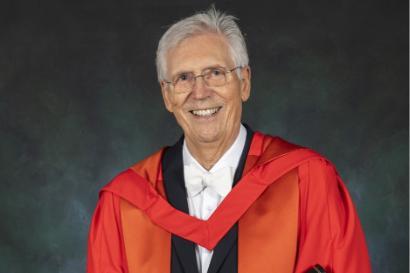
I stepped down from the Chair of the Glasgow Vet Fund last year and I would like to take this opportunity to thank you for your support of the Glasgow Vet School over recent years and to welcome Dr Freda Scott-Park as the new Chair.
Glasgow Vet School has been extremely fortunate to have such a strong body of supporters over many years. It began in the late 90s when funds were raised to establish the Weipers Equine Centre and later to build the award-winning Small Animal Hospital which opened in 2009. There have also been various other programmes seeking support for the large animal teaching facilities and to acquire major items of clinical equipment.
Veterinary teaching and research are closely linked at Glasgow Vet School and it is only by developing new tests and treatments that the veterinary care of our animals can be advanced. To aid this programme of research we have developed funds to support our younger members of our clinical staff through schemes such as the James Herriot Fund and others. These programmes have led to major advances and helped Glasgow Vet School retain its excellent staff at a time when there is a shortage of veterinarians in the UK. Schemes such as the endowed McIntyre International Research Fellowship programme are also supporting overseas exchanges for our veterinary staff to undertake research programmes and build up international collaborative links.
More recently the Vet Fund Committee has turned its attention to the increasingly difficult financial situation of veterinary students during their compulsory clinical training they have to undertake in vacations (known as Extra Mural Studies). This problem is particularly acute for students from less advantaged backgrounds (known as Widening Participation students). To help these students we have established the Jimmy Armour Student Support Fund. Sir James Armour was a very distinguished Dean of the Glasgow Vet School and a leading international veterinary scientist. He was also very devoted to student welfare and it is very fitting that we should celebrate his memory in this way.
Thank you again for all your support for Glasgow Vet School in the past, it has made a huge difference, and I hope that you will continue to support it in the future.
Yours sincerely,
Peter Holmes
Prof. Peter H. Holmes OBE, BVMS, PhD, FRCVS, FRSE
Emeritus Professor, University of Glasgow
Update from Dr Freda Scott-Park
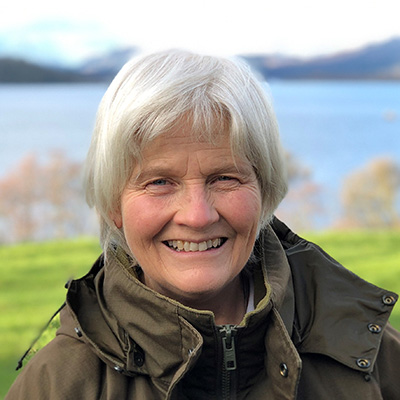
I was delighted to be asked to chair the Vet Fund. However it is a little daunting to follow in the footsteps of someone like Professor Peter Holmes, whose career has been academically formidable. It’s double-daunting when my postnominals include ‘BVM&S’ – indicating graduation in 1979 from the Dick, or the Royal (Dick) School of Veterinary Studies, to give it its full title.
However, for the last 20 years much of my life has been linked to Glasgow University Veterinary School – and I suspect I made a teenage error placing the Dick at the top of my university selection list. Why wouldn’t one want to study in Glasgow, the friendliest of places?
Anyway, it is a pleasure to be involved with the Vet Fund (VF) and I have spent the past few months understanding the range and scope of the funds, why they were founded and what needs to be done to maintain their vital support. Augmenting the work of the VF is the expertise of the staff in the Development and Alumni Office (DAO). I know I will be very grateful for their support as we move into a new period of fund-raising.
In addition to the overarching Vet Fund (General), the following funds also come under the VF umbrella:
- The James Herriot Scholarship Fund awards scholarships to excellent undergraduate and postgraduate veterinary students who, through financial constraints, may otherwise not be able to study at Glasgow.
- The Small Animal Hospital Fund helps us provide outstanding care and treatment to pets by ensuring the purchase and maintenance of the most advanced equipment meaning better and more advanced treatment.
- Weipers Centre for Equine Welfare helps purchase up to date equipment to provide the best possible care and treatment for the horses, ponies and donkeys that come to us for help. It also helps us support our staff and our students through our commitment to excellence and innovation in equine education.
- The Jimmy Armour Student Support Fund provides vital support to cover the costs associated with Extra Mural Studies (EMS), or ‘seeing practice’ as it was known, for undergraduate vet students. The fund benefits vet students who are facing financial difficulty and would otherwise struggle to complete their EMS.
There is an increasing need for support for students at all levels but in this letter, I want to focus on support for undergraduate students. When I went to ‘see practice’ in the 70s, to farms in preclinical years, and veterinary practices in clinical years, hospitality was extended by my hosts – farmers and vets. With only one exception, when I had to pay for bed & breakfast near a practice in Kilmarnock. However, for today’s students that hospitality is rarely offered necessitating travel to and from term-time residences or paying for accommodation, which can be costly.
The EMS requirement is evolving: the Royal College of Veterinary Surgeons (RCVS) assigns the required number of weeks for preclinical (animal husbandry) and clinical EMS. Students who commenced their course before August 2024 must complete 38 weeks of EMS (12 weeks / 26 weeks).
The EMS requirement has been reduced for students enrolling after August 2024 to 30 weeks (10 weeks / 20 weeks). This is still a substantial commitment, and the tough reality is that many just cannot afford to fulfil these requirements without substantial hardships.
Students are constrained to finding practices near their term-time accommodation. However, the VF would like to see these students supported to contribute to both accommodation and transport costs so that EMS selected is meaningful and relevant to career aspirations.
The Jimmy Armour Student Support Fund, which already supports students in the Widening Participation and REACH programmes, urgently needs funds to support more of our students to fulfil their duty to the RCVS. The EMS Team at Glasgow who look after the EMS placements and recognise the benefits of EMS while recognising that for some, it adds considerable hardship and anxiety to the undergraduate course. We are in early discussions as to how we might financially support students – even just a small amount for every student who is struggling to attend EMS placements.
To do that, we need to increase donations to the Jimmy Armour Student Support Fund. We’ve been fortunate to have wonderful major donors over the years, but I strongly believe in giving little and often. If you’re able to give even a small amount, we would be delighted - it will help us plan support for our undergraduates.
We are trying to ensure that ‘giving’ is made much easier – expect to see posters with QR codes appearing across campus. The Small Animal Hospital (SAH) hosts regular Client Information evenings, and this is an ideal opportunity to ask external friends and supporters to contribute. There are moves to adopt a Tap to Donate machine in the SAH - for an experimental period - to see if we can uplift our donations. Students have also offered to help with our fund-raising efforts.
I will conclude this with a big thank you to Peter for his leadership and guidance of the Vet Fund over the past 16 years.
Kind regards,
Dr Freda Scott-Park