

Research Stories
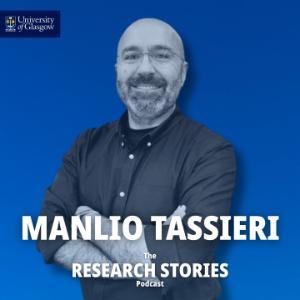
Manlio Tassieri: How can a soap factory lead to scientific discovery?
Dr Manlio Tassieri discusses his journey into rheology and microrheology, and explains how industry collaboration can drive scientific discovery.
Listen on Apple Podcasts | Listen on Spotify
In this episode
- Using optical tweezers to study materials at microscopic scales.
- Why curiosity is central to scientific discovery.
- Working with Soapworks through a Knowledge Transfer Partnership (KTP).
- How industrial challenges can lead to patents and new discoveries.
- The commercialisation journey from research to real-world application.
- Future biomedical applications, including disease diagnostics.
- The value of interdisciplinary research and collaboration.
- Developing tools that enable discoveries by other researchers.
Guest Bio
Professor Manlio Tassieri is Professor of Mechanical and Biomedical Engineering at the University of Glasgow’s James Watt School of Engineering. His research focuses on rheology, microrheology, and the mechanical characterisation of complex materials. His work spans applications in plastics, food, biological tissues, chromosomes and living cells. He works closely with industry partners to develop solutions to manufacturing challenges and devise practical applications.
Partnership Ecosystem
Research doesn't happen in isolation. This section highlights the organisations, networks and collaborators that help turn ideas into impact.
- University of Glasgow
- Soapworks Ltd
- Knowledge Transfer Partnerships (KTP)
- Innovate UK
- Patent and commercialisation specialists
- Biomedical engineering researchers
- Materials scientists
- International collaborators
Organisations Mentioned
Further Resources
Hosted and produced by Nick Bruce, with questions, recording, editing, mixing, artwork and original music by Nick.
Production assistants: Temiloluwa Ajayi & Conor Molloy
Links and resources from this episode
Professor Manlio Tassieri – University of Glasgow Staff Profile
Transcript
NB: Well, thanks for coming.
MT: No, thank you.
NB: Do you want to start by telling me about your research journey, Manlio? How you started, how you chose your subject, why you ended up studying in Naples first, and how you ended up over here.
MT: Yeah, I come from Naples. I'm Neapolitan before being Italian. This is a joke that we often say... So yeah, I'm Napolitan, I took my first high school degree in electronics, then I decided to go to university to do chemical engineering because I liked chemistry a lot, but I was not sure what to choose between chemistry and chemical engineering. One day I went to the institution, and when I entered (the building), I found two doors of two elevators, blue doors. I still remember them, simply because, the night before, I had a dream of two blue doors. So, I said,” okay, then between chemistry and chemical engineering, I'll choose chemical engineering.” and that was actually a good choice.
NB: Oh, do you believe in that kind of thing?
MT: Oh yeah, I do. I was shocked because honestly, the night before, I had this dream of these two blue doors and when I entered; they were hidden, so you could not see from outside, there was no way. That was my first time in that building, so there was no way for me to know that there were those two doors inside the building, so when I saw them, I said, oops, that is a sign. Then after my degree in chemical engineering, I'd been working for one year in the same department - the department of Chemical engineering. So, after one year I basically went to work for a company. Then after two years I decided to quit. I actually took a pretty strong decision to quit the job, and I asked for some help from my brother - he owns two pizzerias in Perugia. So, I had been working with him for eight months, and then one night when I was serving pizzas to some customers, there were a group of young people, young researchers, and one of them was scribbling on a piece of paper, some equation. So, when I was serving him the pizza, I asked, “Who is the scientist?” They were surprised, and asked me back "Why do you understand these equations?” I said, “Look, I'm serving you pizza, but I am a chemical engineer and those are Maxwell’s equations...” They were even more surprised and one of them said, “Would you be interested in going abroad?” And I said, “Yeah, why not - if it is a good opportunity.” and he said, “Come to my office tomorrow with your CV. We will send it around.” The day after I went to his office at University of Perugia, and we sent my CV to the Secretary of the Department of Physics at Leeds University, asking if there were any PhD position available for my profile. And the day after, I received an offer for a PhD position in Leeds in the Department of Physics.
NB: I read your research profile, and it says your work focuses on Rheology and Microrheology. Can you explain that for those of us who don't know what it is?
MT: Absolutely. So, I will explain in simple words - Rheology is the study of the flow of matter. So, pasta, plastic, uh, any kind of food, anything that gets processed is subject to a flow. Rheology studies how the materials form, how they flow under certain conditions. If you do it on a macroscopic length scale it is classical rheology. If you do it on a micro length scale - very small length scales, it is called the Microrheology. The principles are the same, the targets are the same, but the length scales are very different.
NB: And what does this work lead to?
MT: Well, there are many aspects. The fundamental research that I do usually sees me develop experimental and analytical models for measuring the mechanical properties of materials over the widest range of frequencies. This is because materials have what we call “complex mechanical properties”, which means that the mechanical properties change with temperature, change with the flow, the frequency at which you apply, for instance, a force to the material. So, the same material can respond completely differently depending on the different experimental conditions. You want to characterise, you want to know how the mechanical properties of the material will respond to different conditions, because that will drive and control the production of the material.
NB: When you say materials, is your work focused predominantly on a specific industry? Is it a product, is it health?
MT: No, it's pretty broad actually. I've been working on techniques usually used on plastics, polyethylene, polystyrene, these kinds of materials, but on single cells and single proteins. I really enjoy developing methods for measuring the mechanical properties. So, these methods span from bacteriology to the rheology of synthetic materials such as plastics or a single cell. Recently we published a very nice paper in Nature Communications where we show for the first time how to measure the mechanical properties of single chromosomes over seven decades of frequencies. We were able to measure for the first time the characteristic times of chromosomes to self-reorganize. The chromosomes are an ensemble of DNA chains and when you stretch them, they self-reorganise. So, if you do this fast enough, you can actually measure how the self-reorganisation of these DNA chains occur. This was the first time (in history) this has been done.
NB: And what will that lead to?
MT: Well, this is a tool. Now, I'm, I'm not a biologist, but I know it will enable other scientists to perform further study and see, for instance, how the chromosomes will respond to different kinds of drugs. If there is the change in the self-organisation of the DNA chains, so it is a tool. I've been developing tools most of the time, tools for other people to do more research. Recently there was a paper written that I have been using to inform my method for measuring and performing Microrheology with optical tweezers. This is from a group out in New York.
NB: Did you say, “optical tweezers”?
MT: Yes, optical tweezers, it is a new term - perhaps not familiar for everyone.
NB: What's an optical tweezer?
MT: Optical tweezers are a tool in Microrheology. The basic principle is that you use a laser, a highly focused laser, to trap microspheres/microparticles and you trap them in 3D. They are then suspended in material and then you can measure their viscoelastic properties and their mechanical properties. By doing this, you trap them and observe the Brownian motion of these particles as they are still able to fluctuate and vibrate thanks to the thermal energy. So, by performing statistical mechanical analysis of their trajectory, you can end up measuring the mechanical properties of the surrounding media - the fluid that you want to measure. So, you can suspend particles, glass particles, microspheres in the fluid of a protein solution and measure the mechanical property of the protein solution. This is what they've done.
NB: Okay. You work with partners that are not academics, industry partners specifically, I'll ask you about that in detail. But before I do, can you tell us a bit about what you look for in an industry partner, and what makes a collaboration worth doing for you from an academic perspective?
MT: I personally like challenges. Where other people see problems, I see challenges. So usually industries, they come to you, they knock the door because they have problems that they don't know how to solve. Recently an example was that I've been collaborating in a completely different field from biomedical engineering. I was collaborating with a company called Soapworks. They produce soap and they had a problem. So, they knocked on the door of the University of Glasgow. Because they are a small company, they don't have an R&D department. They don't have a research and development department. So, they were facing a problem. I realised I could help - it was a problem of material categorization and process optimization, which falls within my expertise.
NB: To backtrack, what was this? What was the problem that they came to you for and how did your expertise match it?
MT: Their problem was they were dealing with the new material, a new synthetic soap. They were facing issues with the production of this material because it was a new material that has different mechanical properties than traditional soap bars. Any kind of material, in order to optimise the production, you need to characterise first the mechanical properties, whether it is soap, whether it is pasta, whether it is plastic, whatever. You need to know the mechanical properties of the material. These (properties) will control the process.
NB: You need to know what it's made of and how it's constructed, how it's held together. Is that what you mean?
MT: Actually, it’s not just the (chemical) composition, you need to know the mechanical properties, how the material responds when you apply force or a strain - if you stretch, it, if you press it, how the material will deform because it undertakes a production process. It has to flow through pipes or other complex machines, so you need to know how the material responds to an applied force or an applied strain. Usually big companies, have their own R&D (Research and Development Departments) so they have the capabilities of characterising the materials before the production and therefore choose the right parameters for the production. Whereas usually small companies don't. They (Soapworks) were asking for help, so what we did was a study with them. I can say proudly that we actually made a discovery; because they are producing this solid-ish material - the soap bar is a solid material - what we would define as solid material, is not easy to measure the mechanical properties of these materials. A conventional method may not work and indeed in this case it was not working well. So, I developed and discovered a new method for measuring the mechanical properties of soft solids. We filed a patent, so the company owns the IP, and the patent was published this January. Although the project has finished, we are still collaborating because we want to further exploit this opportunity.
NB: Remind me, what this new material was, that they were using in their soaps?
MT: It is a synthetic soap, so it's ecofriendly - not like a conventional soap, that usually comes from fat. I don't remember the precise recipe but it’s all synthetic.
NB: So, the idea is that this soap is going to be more environmentally friendly. That's the goal - to make an environmentally friendly soap?
MT: Yes, absolutely. But because it’s a completely new material that they needed to understand the mechanical properties in order to optimise the production. This is what we provided, as we not only characterised the mechanical properties, but we actually developed a new method, a very efficient method for measuring the mechanical properties. Conventionally, to measure the mechanical properties of this kind of material would have taken at best a couple of days, whereas this method takes two minutes. So huge improvement and is much more informative than conventional method. So now they can measure the mechanical properties almost in real time because it only takes two minutes.
NB: Okay. Can you just take me a little bit behind the curtain of how a partnership like this works on a day-to-day basis. Is it lab visits by you? Is it remote data exchange? Are you doing workshops with the staff to onboard them with your techniques or something else?
MT: This was a KTP project. A knowledge transfer partnership is a partnership between the University of Glasgow, the company and an associate. The associate was working basically half of the time there at the Soapworks - producing the material, studying the material, characterising the material and half of the time here at the University of Glasgow, within our lab performing neurological measurements, computational fluid dynamics simulations and so on. Basically, the outcome was the patent for the new method of characterising the materials efficiently. That now has been implemented in the production process, as well as improving the optimisation of the production through new machinery.
NB: Does this mean that you were spending a lot of time on site at Soapworks?
MT: We (the academics) were spending at least one day per week there, I was the lead academic collaborating with Professor Manosh Paul. We would spend at least a one day a week there - at the company, but the associate was the person doing most of the job - under our supervision.
NB: You mentioned that you discovered a new technique for measurement and that's patented. That's a pretty key discovery. Do you think that you would have come across a discovery like that had it not been for an industry partnership at some point, or was the industry partnership a key catalyst to making these new discoveries?
MT: Yes, I can say easily that it is thanks to this KTP project that I made this discovery.
NB: Can I buy this soap?
MT: Yes, they produce soap for major companies, although I’m not sure I am allowed to disclose the exact ones. It’s an international company so you will find their productions in any big supermarket.
NB: Okay, I see, so a very successful partnership then?
MT: Unmistakably so.
NB Do you have sights set on a future partnership? And if not, where do your goals sit in terms of what your next industry partnership might look like?
MT: We are still collaborating with Soapworks. They now have to decide what they would like to do with this discovery, with this patent, whether to license to a company that already produces rheological instruments or create a new company here in Scotland. This could be quite challenging, but very exciting as well. The IP belongs to them. I will support both the ideas - but it is their decision to make. What I am certain about is that this discovery will have a huge impact in many fields. So whether they are going to license it or they're going to actually create a company here for manufacturing this device, it will have a huge impact in any industry working with soft-solid materials like rubber, used in tires for example, and any soft-solid material used in the food industry. Currently we are investigating this technology’s application in biomedical engineering, specifically for use in characterising the mechanical properties of soft tissues. This is because you can use it as a means for discriminating the state of the tissue and you can build correlation if the material is a healthy tissue or cancerous tissue. Given that it is so fast, only taking two minutes and how simple it is, it can be used by non-experts and can be easily transported somewhere like a hospital.
NB: What are the possible use cases of that?
MT: We are now building the evidence that we can measure the mechanical properties of soft tissues and biological tissues. We know that it works so we filed a patent for synthetic materials and now we, we are building the evidence that shows it works for soft tissue to characterise different states of biological tissue. We want to build a correlation between healthy tissues and unhealthy tissues by measuring its mechanical properties.
NB: I'm not sure I fully understand…
MT: So, let's go with a very extreme case - rigor mortis. A body is very rigid, right? Whereas healthy tissues are soft. So, we can discriminate between healthy tissues and not healthy tissues by measuring the mechanical properties. By performing a lot of measurements, we build a correlation between healthy tissues and tissues that are affected by any kind of disease. This then becomes a diagnostic tool, especially for cancerous tissues, we can potentially eventually discriminate between invasive and non-invasive cancer tissues and so on. Nowadays there are already techniques recently published and patented which take a very specialised operator and takes more than two hours, whereas our method takes two minutes and you don't need a specialised operator. So, there is a huge potential to be used in the hospitals.
NB: So, there's a huge interdisciplinary aspect to this. Would you say that a lot of your cross-disciplinary work involves Medicine, Life Sciences, and have you ever done a multidisciplinary collaboration involving anything a bit unexpected?
MT: Well, most of my research outputs, which are all my publications, mostly are with collaborators, from different disciplines. I said, I'm not a biologist, so I'm no expert in biology, but I tend to collaborate with them, and we do make discoveries and we do publish high impact journals and articles, making new discoveries on the biological systems. A recent one, was last year - a nature communication measuring the mechanical properties of a single chromosome. This not only proved information about a specific study where we were changing the components of the periphery of the chromosome, but we also provided a tool for further study measuring the mechanics of a single chromosome. The chromosome is just about a couple of microns long, and we were stretching it using optical tweezers - a single chromosome…
NB: Wow, that is very impressive. Do you think if you were to do another industry collaboration, say in the next five years, this the kind of road that you'd want to go down? Or if you could choose any industry collaboration to work on next, what would it be?
MT: Honestly, I don't know. I am fascinated by open questions in the sense that if there is a problem that falls within my expertise, then I really focus on that and try to address it and solve it. This is the basis of my academic career.
NB: Do you seek out these problems? Do you have your antennae up all the time for a problem to solve? Is that kind of person you are?
MT: Well, I have established myself as an expert in the field of rheology and microbiology by working hard and producing high quality papers, because of this there are people asking to collaborate with me, because they know the quality of my research and the professionality of this. So, I have collaborators all around the world. 2026 continues to be a very fruitful year in the sense that I have current collaboration with MIT, with people in Spain, Madrid and all of this will lead to new results. I'm not saying what the results will be exactly - but stay tuned because they will have a huge impact in my field and in general, because we are going to develop new methods that dramatically simplify the way some kinds of experiment are performed - whilst also making the quality of the output much higher.
NB: Would you describe yourself as an optimiser in life? Are you somebody who is constantly striving to streamline processes and optimise?
MT: No, not an optimiser, to be honest, I have developed new methods, not optimised already existing methods. Whilst I have optimised existing methods I've developed new ways, new methods, by simplifying.
NB: What motivates you to do that?
MT: Uh, curiosity. I've been working mostly in the field of applied rheology, and I really enjoy developing new methods that will allow other scientists to make better and further discoveries. I was telling you that just a few weeks ago, there was a paper in Science, and they were using the methods that I have developed. I think it is pretty important to provide tools for others to make an impact, to contribute and take a step further towards world changing, in some capacity.
NB: Yes, absolutely. What is one question, to finish up, that you wish people would ask you about your work, or perhaps a question that I haven't asked you?
MT: Are you happy with your work? Do you enjoy your work? Yes, I do. I love it. I'm very happy with being an academic. I'm very happy to be part of the University of Glasgow. It is a huge achievement. Personally, I come from a very modest family, so to be here, have students who love me, to receive very good feedback from students, who I also love means I'm very happy with this job.
NB: The students are the lifeblood of this campus.
MT: Yes, absolutely. The university relies on students and we are forming them; we are forging them.
NB: And what a privilege to do so.
MT: Absolutely. And I think they feel it. I've been teaching since 2012 and since then have always received very positive feedback from them and simply because I love to teach and perhaps also I'm able to transfer my knowledge without stressing them too much. For instance, the typical example is the example of Nutella, why you process Nutella at high temperature?
NB: Why is that?
MT: Well, try to spoon a jar of Nutella taken from the fridge and then try the same when you keep the Nutella on the electric heater for few minutes. You will see a big difference in mechanical properties. So, Nutella is processed at a relatively high temperature - forty degrees roughly - because if you were processing it at room temperature, it would cost you a fortune. Okay. So that is the point.
NB: So, do you know how spreadable butter is made then?
MT: Yeah, that is exactly the kind of question that I love to answer when a company comes to me and says, “How we can make it more spreadable?” That was that was actually the question that I faced when I was undergraduate for four months, I was in Colworth at Unilever as an undergraduate for a summer experience. We were making the jam more spreadable by measuring the logical properties of it.
NB: How fun. Do you need to taste it along the way?
MT: Yes. Yes, I did.
NB: So, you mentioned earlier that you briefly worked for your brother's pizza business. Were you able to help him with his dough?
MT: No, but that is actually one of the experiments that I would like to do but I never had time… Measuring the rheology of dough would make a very nice science paper.
NB: You could see if you can crack the recipe for a dough that won't collapse after it's over proved.
MT: Yes, this is very funny - I make this kind of joke very often with my wife. She's an expert in preparing very good dough.
NB: Okay, then. Well, no study is required. Thanks very much for chatting to me today Manlio. It's been educational.
MT: Thank you very much for hosting me and it's been my pleasure. Thank you.