

The Computational Fluid Dynamics Lab
Welcome to the CFD Lab of the University of Glasgow!
The Modelling and Simulation group in the CFD lab is a specialised research group that develops advanced computational and experimental methods, to advance research and address real world challenges across multidisciplinary engineering.

Meet the team
Research topics, methods, and tools
CFD Lab Methods and Tools
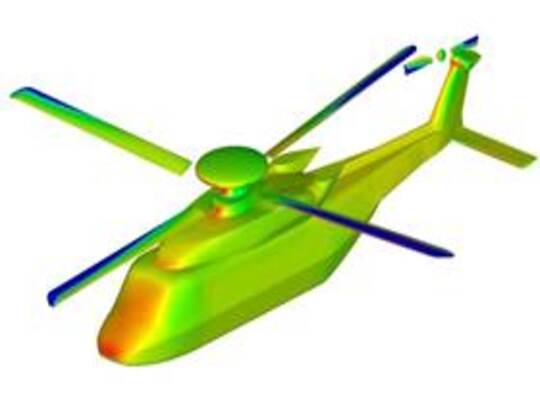
The Helicopter Multi-Block (HMB)3 CFD Framework
HMB3 can solve the flow around complete vehicles including helicopters, fixed wing aircraft, ships and cars. It has also been used for wind turbine analysis using low-Mach CFD schemes. For helicopters HMB3 has additional features to trim the aircraft in hover or forward flight, to fly manoeuvres or perform design optimisation.
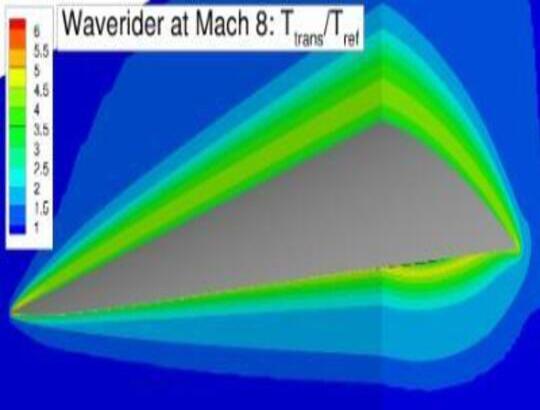
MΦC Solver (Multi Physics Code)
The MΦC (Multi-Physics Code), a computational framework for multi-physics/multi-scale flow simulations under development at the University of Glasgow.
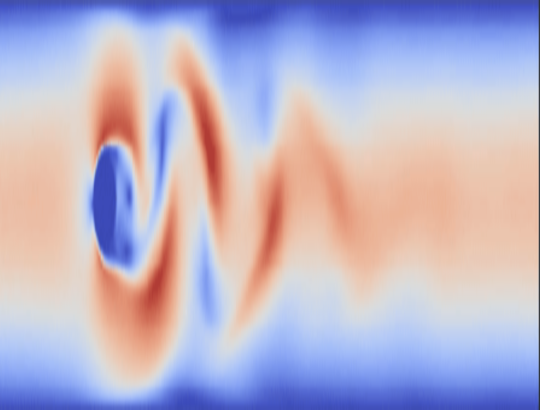
Realtime CFD
The Lattice Boltzmann method solves the macroscopic fluid problems and sits at the boundary between the molecular and continuum views of a fluid. The fluid is simulated by the moment and collisions processes of a limited number of particles in a restrcited number of directions.
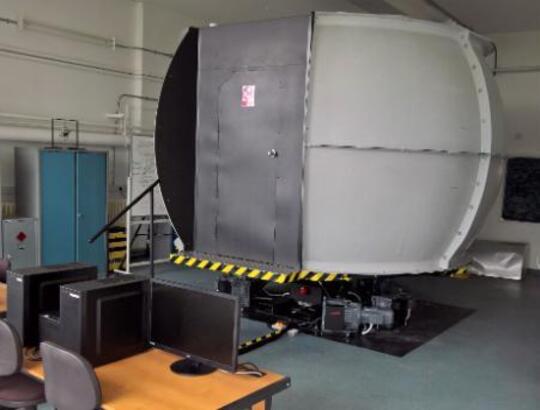
Daedalus Flight Simulator
This is a new facility for high fidelity flight simulation, designed around generic components and an open software architecture. The facility offers a 6 DOF motion base, a projection system, flight controls and cockpit, all accessible via a common software system.
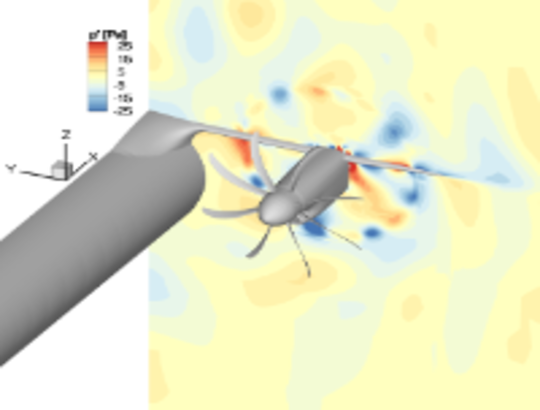
HFW-H2: Aero-Acoustics Prediction
Computational Aeroacoustic Analysis of Propellers
Computational Fluid Dynamics (CFD), coupled with different acoustic methods, is used to analyse tonal and broadband noise spectra of different propeller innovative designs. Installed configurations (model-scale and full-scale) are also studied to investigate the airframe interaction's effects.
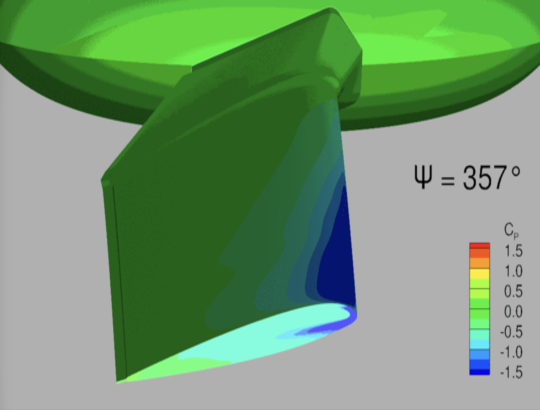
Research Projects
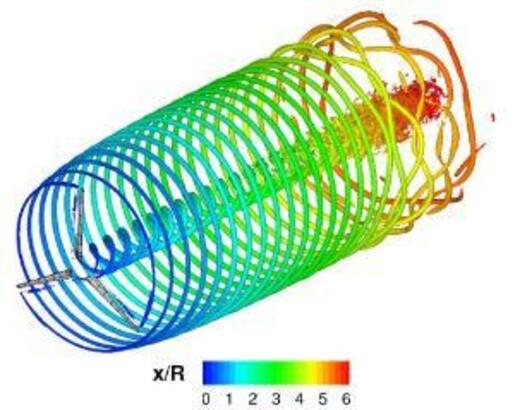
Wind Turbine CFD
Fri, 25 Jul 2025 12:19:00 BST
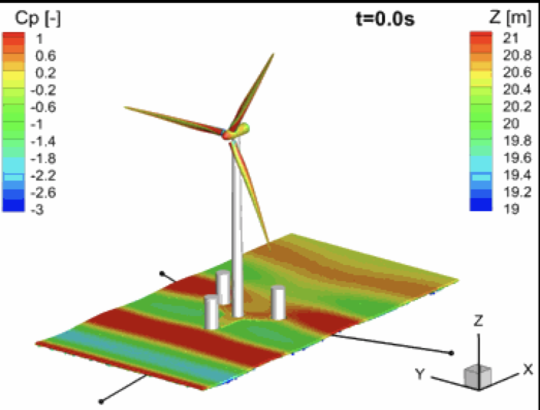
Off-shore Wind Turbines
The main objective of the project is to develop a coupled model of floating off-shore wind turbines. The aerodynamic loads on the rotor are computed using the Helicopter Multi-Block (HMB) flow solver. The hydrodynamic loads on the support platform are computed using the Smoothed Particle Hydrodynamics (SPH) method, which is mesh-free and represents the water and floating structures by a set of discrete elements, referred to as particles.
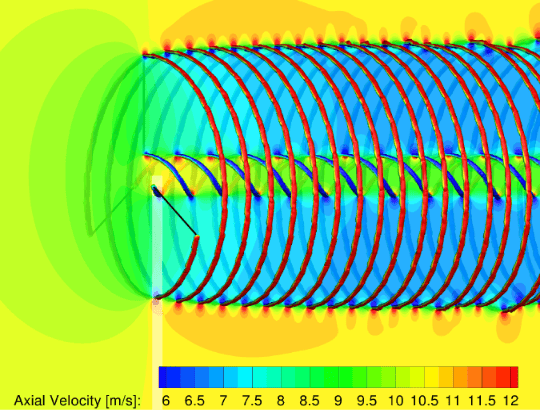
Engineering Models for Wind Turbines
Engineering Models for Wind Turbines
In this project differentengineerings methods are implemented, analysed and compared with 3D CFD simulations and experimental results. Most of the methods can make use of a database of experimental or CFD-generated data for the sectional aerodynamics of the blades.
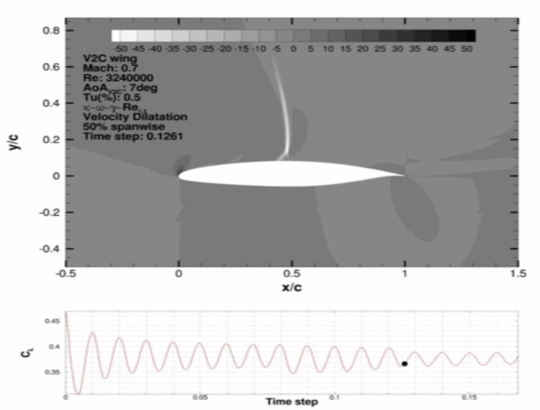
Shock Boundary Layer Interaction
Shock Boundary Layer Interaction
Aligned with the needs of the aeronautical industry the general aim of the Transition Location Effect on Shock Boundary Layer Interaction (TFAST) project is to avoid the laminar boundary layer to be penetrated by the shock wave. The benefits of having laminar boundary layer are so important that the transition should occur as late as possible.
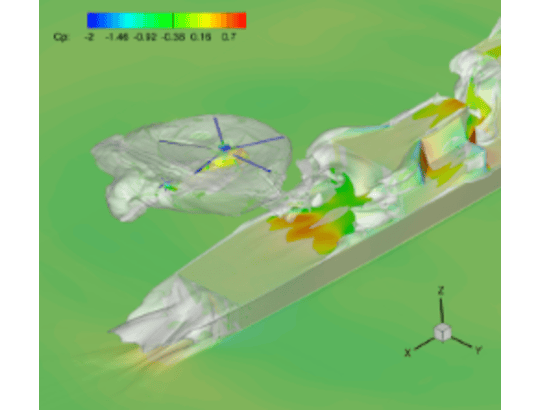
CFD for Ship Helicopter Landing Simulations
CFD for Ship Helicopter Landing Simulations
The goal of this project is to simulate manoeuvring rotorcraft by coupling a Helicopter Flight Mechanics (HFM) method with the Parallel Multi-Block CFD solver HMB developed in the University of Glasgow.
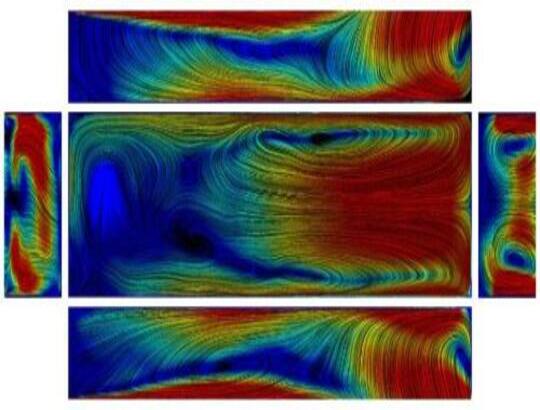
Transonic Cavity Flow
The current project uses turbulence simulation methods including Detached-Eddy Simulation and Scale-Adaptive Simulation to resolve this very turbulent, energetic flow field. The cost of turbulence simulation is high due to having to resolve a range of flow scales from small to large and short-lived to long-lived.
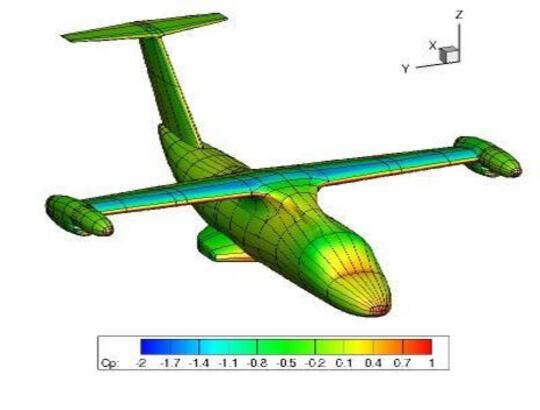
Tiltrotor CFD
During the past 50 years, the scientific community attempted to answer some complex questions about the tiltrotor aircraft. This new type of vehicle is presented as an alternative to helicopters, and has the capacity to combine vertical take-off/landing capability with high speed cruise. A compromise in many aspects of design is required, since the same blade has to operate as a helicopter rotor in hover and as propeller in forward flight. In addition, interactional aerodynamics can be very important in tiltrotor aircraft, which should be extensively studied and researched to improve safety and performance.
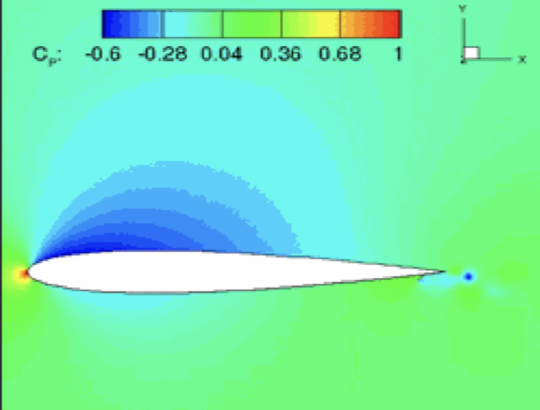
Flow Control
The objective of the project is the investigation of the flow around the main rotor blade of a helicopter and its control using active elements on the blade surface. This is driven by the need to enhance rotor performance and extend the helicopter flight envelope beyond what is possible with traditional blade shape optimization.
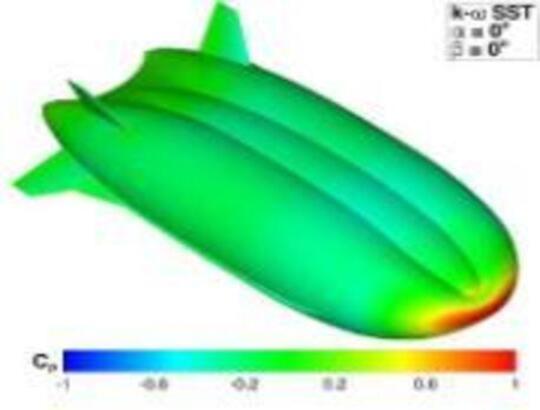
CFD for Hybrid Air Vehicles
LOCATE (LOw CArbon aircraft using lighter than air TEchnology) is a collaborative project between Hybrid Air Vehicles Ltd, Blue Bear System Research, Forward Composites Ltd, University of Sheffield, Cranfield University and the University of Glasgow. Within the framework of the LOCATE project, University of Glasgow has the task of analysing lighter-than-air vehicles (LTAs) using Computational Fluid Dynamics (CFD). The focus is on the optimisation of the propulsors, and on the characterisation of the full vehicle aerodynamics.
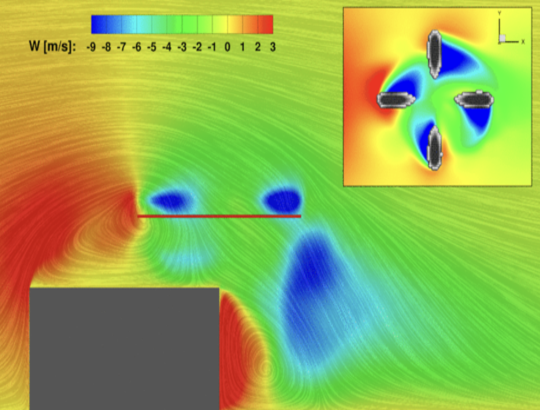
Wake Encounter with Aircraft
The wakes generated by helicopters or wind turbines could interfere with passing-by aircraft. A number of serious and fatal accidents have so far been reported when light aircraft entered into a helicopter wake resulting in loss of control.
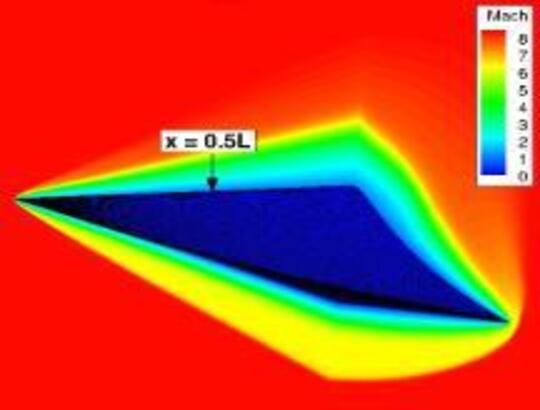
Rarefied Gas Dynamics
With the increased interest in hypersonic vehicles, there is a need for efficient and accurate prediction of the flow field, aerodynamics and heat transfer throughout their flight regime. At intermediate altitudes, the flow around an hypersonic aircraft can be characterised as mainly continuum with localised areas, generated by the rapid expansion in the wake of the vehicle as well as by strong gradients in shock waves and boundary layers, that display thermal non-equilibrium effects.
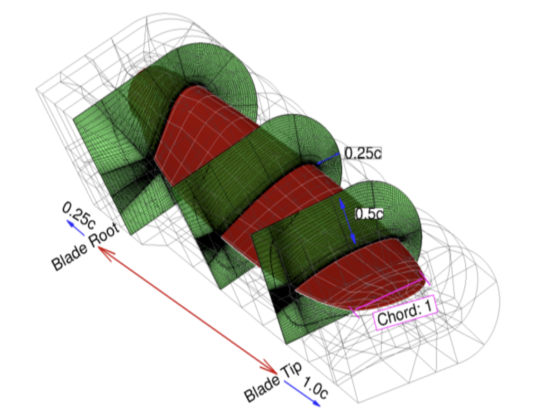
Propeller Stall Flutter
Propeller flutter can manifest in a variety of different ways: Classical bending/torsion, whirl, stall flutter
These types of flutter require the accurate capture of the non-linear aerodynamics associated with propeller blades. Stall flutter in particular, due to the highly detached nature of the flow, needs detailed unsteady flow modelling.
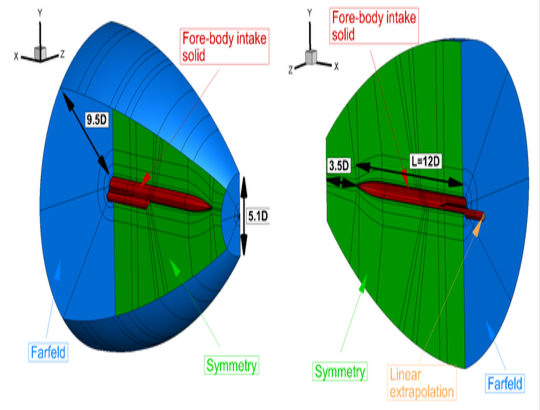
SWBLI for High-Speed Intakes
The interaction of a shock wave with a boundary layer (SWBLI) occurs in many applications such as supersonic wind tunnel diffusers and supersonic (high-speed) intakes. Under specific operating conditions multiple shock wave boundary layer interactions (MSWBLIs) can form.
The Bristol Fighter 2 Aircraft
The Bristol Fighter 2 Aircraft
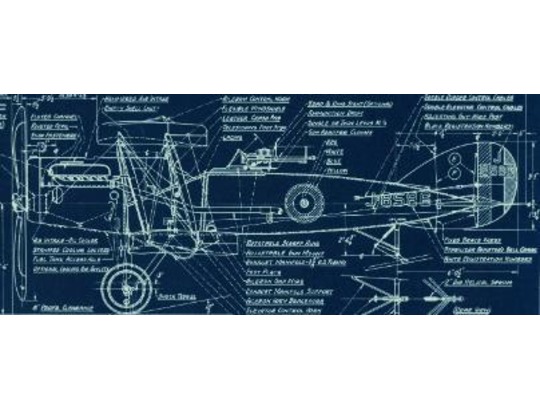
A model of the BF2 aircraft is currently under development for use with the Daedalus 1 flight simulator of the Engineering School of Glagow University. The project makes good use of published reports and data on the BF2 including a flight test report from 1918.
Use of HMB3 for the simulation of compound rotorcraft
Use of HMB3 for the simulation of compound rotorcraft
Compound rotorcraft is a generalisation of the term compound helicopters proposed by Graham[1]:"a rotorcraft which, in flight, and at slow speed derives the substantial proportion of its lift from a rotary wing system but at speed can generate lifting and longitudinal thrust from a suitable combination of rotary wing system, fixed lifting surface(s) and auxiliary propulsor(s)".
Use of HMB3 for simulations of brown-out and white-out
Use of HMB3 for simulations of brown-out and white-out
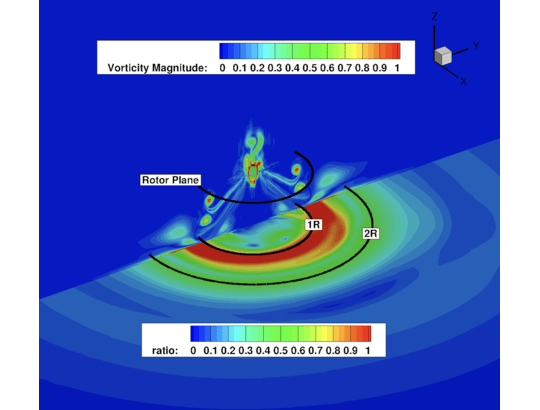
Brown-out and white-out occur when helicopters operate in ground proximity, due to the interaction of the rotorcraft wake with the particles of a loose sediment bed. This interaction can eventually cause the uplift of particles from the ground and their entrainment in the flow.
Advanced Rotor Blade Design
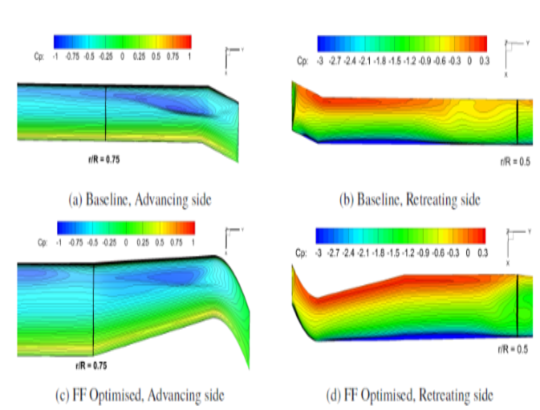
Helicopters are complex, unique machines that serve many roles in the modern world and are present in the military, civilian, medicine and fire-fighting duties. Improvements in the aerodynamic design of the helicopter, main rotor blade in particular, can lead to reduced fuel burn and flight envelope expansion.
Wake Modelling for Rotary Wings
Wake Modelling for Rotary Wings
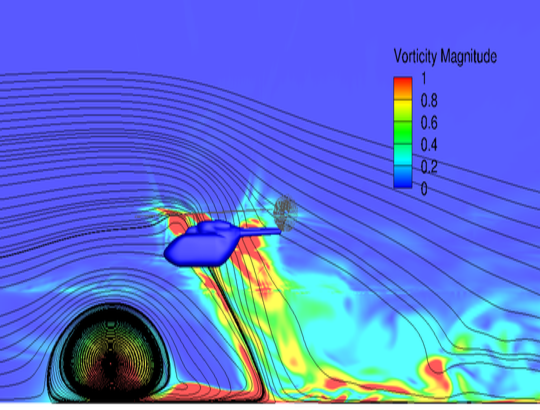
Helicopters support a broad range of services (as search and rescue, coastguard, firefighting etc.) and adverse environmental conditions can play a crucial role in the safety of their operations with a significant number of accidents ascribed to the hazardous working environment. As a result, wake encounters and rotor wake/obstacle interactions have become a challenging research topic in the last few years.
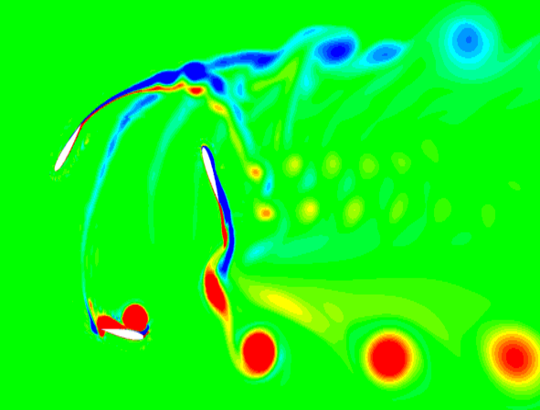
WMB3 simulation of VAWT
An advantage of Vertical Axis Wind Turbines (VAWT) is that they are not sensitive to the direction of the wind. This makes them ideal for sites where the wind direction is highly variable such as urban settings.
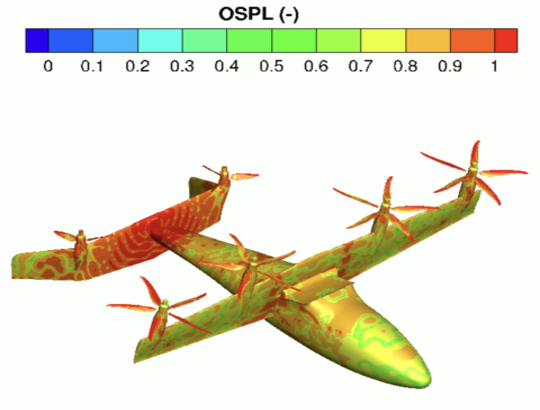
eVTOL Aeroacoustics
With the advancement in electric battery design, aircraft designers and manufacturers are no longer constrained to established configurations. Developments in Vertical Take-off and Landing (VTOL) aircraft have also been seen in recent times through the design of modern tiltrotor aircraft such as the AW609 and the V-280 Valor.
Numerical & Experimental Study of Propeller Aeroelasticity (NESPA)
Numerical & Experimental Study of Propeller Aeroelasticity (NESPA)
This project focuses on propeller aeroelasticity and more specifically, propeller stall flutter. Stall flutter is seen as a potential hurdle in the progress of turbo-prop designs and may threaten the delivery of new, faster, quieter, and efficient blades. The same problem manifests itself on tilt-rotor blades at high speed, multi-rotor hybrid/electric aircraft and may limit the potential use of RPM-regulated rotor systems. Research in this area is expected to have a strong impact on future aircraft designs.
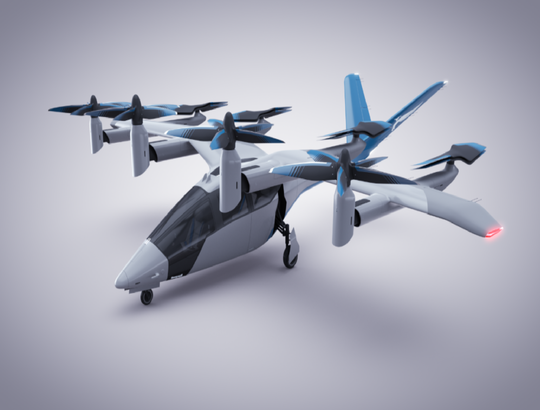
eVTOL Propeller Optimisation
The CFD Laboratory of the University of Glasgow collaborated with Vertical Aerospace to assist in designing their VX4 propellers. The VX4 is an Electric Vertical Take-Off and Landing (eVTOL) aircraft with a tilt-rotor configuration, having four tilting front rotors and four fixed rear rotors mounted on the wing.
eVTOL Propeller Optimisation
Fri, 25 Jul 2025 12:24:00 BST
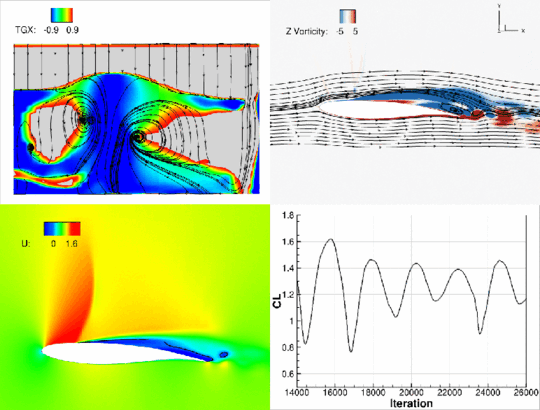
TEAMAero - SBLI
Shock-Wave/Boundary Layer-Interaction (SBLI) is a phenomenon of strong industrial and scientific interest because of the strong, and negative, impact it has in many aeronautical applications and the somehow obscure physics of the problem. SBLI is studied in the context of the European project TEAMAero (Towards Effective Flow Control and Mitigation of Shock Effects In Aeronautical Applications).
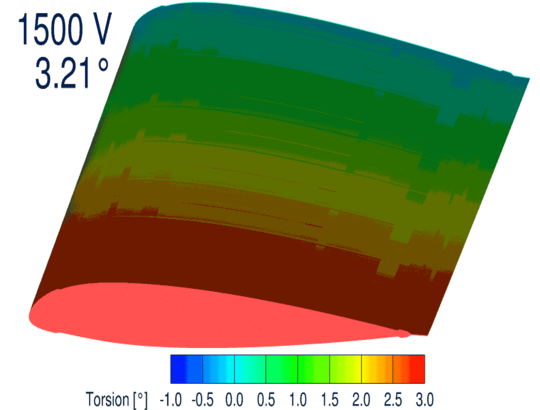
STAR: Smart Twisting Active Rotor
STAR: Smart Twisting Active Rotor
Smart rotor blades featuring flaps, trailing edge extensions, morphing tips, active twist, etc. are currently studied to provide better performance over conventional designs. In the UK, the trailing edge flap has been extensively studied as part of projects like REACT and RTVP of Leonardo Helicopters. In Europe, the Clean Sky 2 project also considered main rotor blades with flaps of the Gurney type. In the US, model scale rotors with several trailing edge flaps have also been studied aiming at noise and vibration reduction.
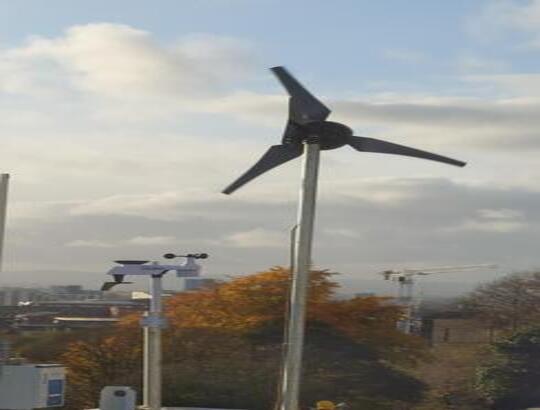
Small Scale Wind Turbine Project
Small Scale Wind Turbine Project
Small scale wind turbines are popular for power generation in areas with no power grid access. The wind turbine at the University of Glasgow is currently located on the roof of the James Watt South Building and the project is setup to provide data and a real-world example of a wind turbine to students and researchers.
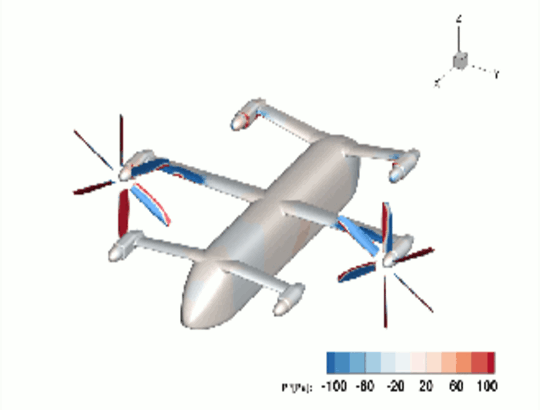
Aerodynamic / Aero-acoustic / Aero-elastic Design and Analysis of Heavy-lift eVTOL Vehicle
Aerodynamic / Aero-acoustic / Aero-elastic Design and Analysis of Heavy-lift eVTOL Vehicle
This work presents the multi-fidelity design and analysis methodologies of the aerodynamics/acoustics/elasticity of the Skybus heavy-lift eVTOL at Glasgow. The main tasks of this work focus on the propeller design (detailed at the end of this page), the airframe design, and the evaluation of the overall vehicle acoustics. The aerodynamic characteristics of the initial airframe designs were first calculated through CFD simulations.
Greener Aviation with Advanced Propulsion Systems (GAAPS)
Greener Aviation with Advanced Propulsion Systems (GAAPS)
Greener Aviation with Advanced Propulsion Systems (GAAPS) is the latest project of the UK Vertical Lift Network. This 3-year long project builds on existing collaborations within the UKVLN between Manchester and Glasgow Universities and industry (Rolls-Royce, Dowty Propellers, DSTL, HAV, GKN, SIemens, and Leonardo Helicopters forming part of the GAAPS industry board).
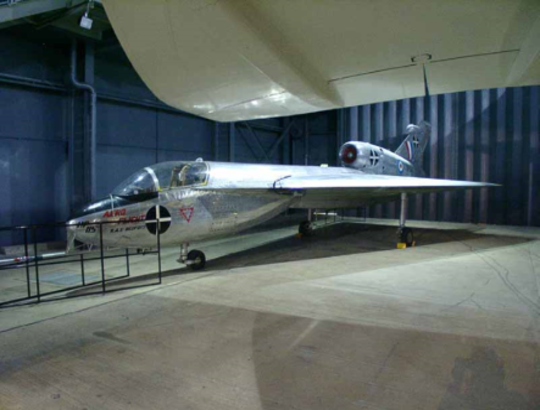
Aerospace Exhibition and Display
Aerospace Exhibition and Display
Our Division has a rich history and some of it can be seen through the displays and models exhibited in our building. This web page provides some basic info about what is currently in our collection and should be used as a starting point for further research in the history behind each item.
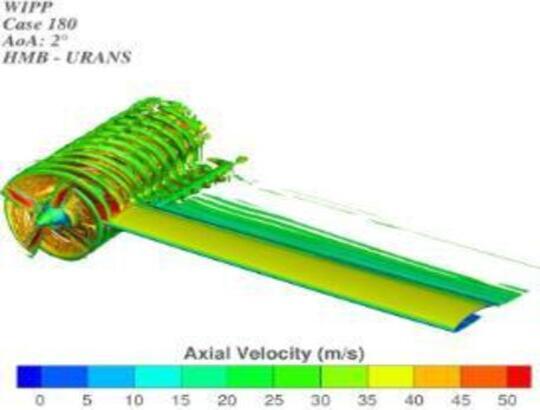
Workshop for integrated propeller prediction (WIPP)
Workshop for integrated propeller prediction (WIPP)
Using the wingtip-mounted propeller geometry from the WIPP project as the baseline of the numerical investigation of novel rotorcraft propulsion systems, the method used in the HMB3 solver was validated against experimental data from NASA.
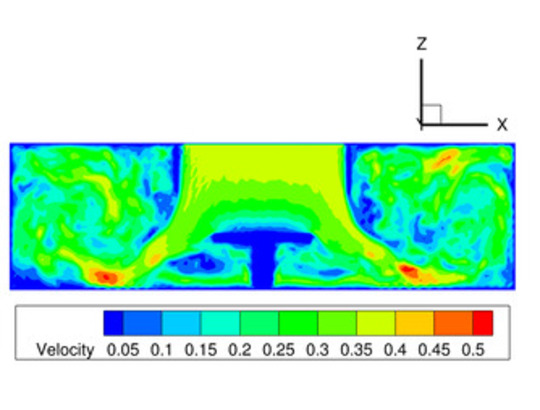
Minimising Airborne Infections in NHS Surgical Theatres via Real-time Flow Simulation and Virtual Reality Visualisation
Mon, 08 Jun 2026 16:43:00 BST
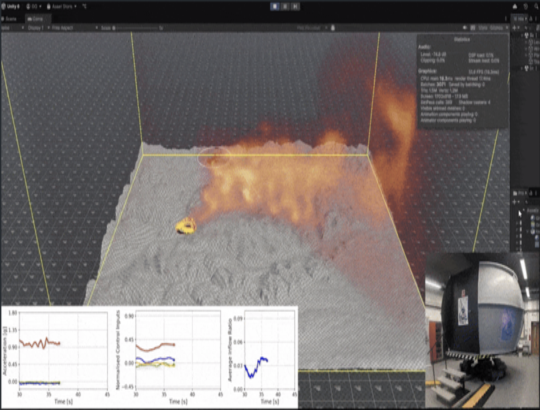
Real-Time CFD in the simulation of Aerial Firefighting
Real-Time CFD in the simulation of Aerial Firefighting
The simulation environment combines the aircraft flight dynamics, atmospheric modelling, empirical wildfire simulation, and water physics within a single system. The objective is to investigate aircraft performance, pilot workload, and firefighting effectiveness under various operational conditions.
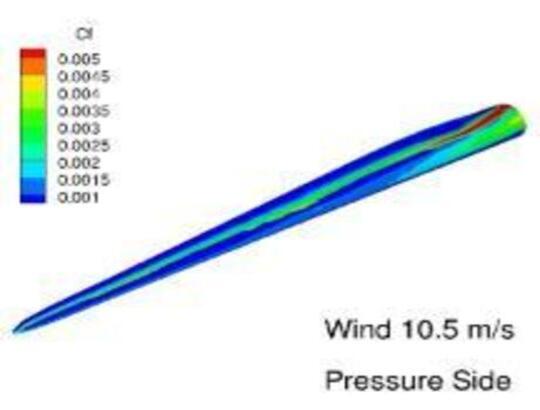
Transition Modelling
In many engineering applications, flow computations without considering the transition from laminar to fully turbulent flow may result in incorrect predictions. At the University of Glasgow CFD Lab, transitional model based on the intermittency concept are implemented in the HMB3 code and constantly developed to takle laminar to turbulent transition across a wide range of applications.
Recent Pulications
2026
Chronis, T., Usov, D., Filippone, A., Zhang, T., Barakos, G. (2026) Numerical Simulations of a Heavy-lift eVTOL.
Zhang, T., Barakos, G. (2026) Towards Automated, Adaptive, and Mesh-free CFD Modelling for Rotorcraft: Point Cloud Generation.
Dada, O., Barakos, G., Zhang, T. (2026) Coupled Rotorcraft–Atmosphere Simulation for Firefighting Applications.
Francis, A., Zhang, T., Barakos, G. (2026) High-fidelity Aerodynamic Investigation of Rotors within the Vortex Ring State.
Dada, O., Barakos, G., Zhang, T., Luo, Y. (2026) A framework for Aerial Firefighting Simulation. CEAS Aeronautical Journal, (doi: 10.1007/s13272-026-00971-1)
Francis, A., Zhang, T., Barakos, G. (2026) Correlations between Blade Loadings and Wake Structures within the Vortex Ring State. (doi: 10.60711/AERO2026.20260318.10425478290162153)
Zhang, T., Woodgate, M., Barakos, G., Luo, Y. (2026) A multi-start aerodynamic shape optimisation approach via multi-fidelity neural networks. Aerospace Science and Technology, 168, (doi: 10.1016/j.ast.2025.111006)
Dada, O., Zhang, T., Barakos, G. (2026) A Two-Way Coupled Actuator Disk Model for CFD-based Rotorcraft Flight Simulation.
Lin, Y.-H., Qiao, G., Zhang, T., Barakos, G. (2026) High-Fidelity Investigation of Propeller-Wing Aerodynamic Interference in Distributed Propulsion.
Francis, A., Lin, Y., Zhang, T., Barakos, G. (2026) High-Fidelity Modelling of Flight Physics Within the Vortex Ring State.
Woodgate, M., Zhang, T., Barakos, G., Raposo, H. (2026) Selection and Optimisation of Aerofoil Families for Rotary Wings.
2025
Zhang, T., Barakos, G. N. (2025) SDF-guided point cloud generation framework for mesh-free CFD. International Journal for Numerical Methods in Fluids, 97, pp. 1035-1056. (doi: 10.1002/fld.5390)
Zhang, T., Woodgate, M., Barakos, G., Luo, Y. (2025) A Multi-fidelity, Multi-start Approach for the Aerodynamic Design of Propellers.
Zhang, T., Barakos, G., Furqan, , Foster, M. (2025) Multi-fidelity Aerodynamic and Acoustic Design and Analysis of a Heavy-lift eVTOL.
2024
Zhang, T., Barakos, G. N., Filippone, A., Furqan, (2024) High-fidelity aero-acoustic evaluations of a heavy-lift eVTOL in hover. Journal of Sound and Vibration, 584, (doi: 10.1016/j.jsv.2024.118453)
Zhang, T., Barakos, G. N. (2024) Assessment of implicit adaptive mesh-free CFD modelling. International Journal for Numerical Methods in Fluids, 96, pp. 670-700. (doi: 10.1002/fld.5266)
Qiao, G., Zhang, T., Barakos, G. (2024) Numerical simulation of distributed propulsion systems using CFD. Aerospace Science and Technology, 147, (doi: 10.1016/j.ast.2024.109011)
2023
Zhang, T., Barakos, G. N. (2023) Assessment of Implicit and Adaptive Mesh-free CFD Modelling. (doi: 10.2514/6.2023-4330)
Zhang, T., Barakos, G. N., Furqan, , Foster, M. (2023) High-fidelity aerodynamic and acoustic design and analysis of a heavy-lift eVTOL. Aerospace Science and Technology, 137, (doi: 10.1016/j.ast.2023.108307)
Zhang, T., Barakos, G. N., Furqan, , Foster, M. (2023) Multi-fidelity aerodynamic design and analysis of propellers for a heavy-lift eVTOL. Aerospace Science and Technology, 135, (doi: 10.1016/j.ast.2023.108185)
2022
Qiao, G., Higgins, R. J., Barakos, G. N., Zhang, T. (2022) CFD Study of eVTOL Distributed Propulsors.
Zhang, T., Higgins, R. J., Barakos, G. N. (2022) Optimisation of Distributed Propulsion Using CFD. (doi: 10.2514/6.2022-3299)
Zhang, T., Higgins, R., Barakos, G. (2022) High-fidelity numerical investigation of complex propeller flows.
Zhang, T., Barakos, G. N. (2022) High-fidelity numerical investigations of rotor-propeller aerodynamic interactions. Aerospace Science and Technology, 124, (doi: 10.1016/j.ast.2022.107517)
Zhang, T., Barakos, G. N. (2022) Toward vehicle-level optimization of compound rotorcraft aerodynamics. AIAA Journal, 60, pp. 1937-1957. (doi: 10.2514/1.J061032)
Zhang, T., Barakos, G. N. (2022) High-fidelity numerical analysis of ducted propeller aerodynamics and acoustics. Springer
Boisard, R., Lefevre, L., Zhang, T., Barakos, G., Visingardi, A., Lößle, F., Kostek, A., Andronikos, T., Keßler, M., Wickersheim, R., Colli, A., Gibertini, G., Zanotti, A. (2022) Rotor / Rotor Aerodynamic Interactions – A Garteur Action Group.
2021
Zhang, T., Qiao, G., Smith, D.A., Barakos, G.N., Kusyumov, A. (2021) Parametric study of aerodynamic performance of equivalent ducted/un-ducted rotors. Aerospace Science and Technology, 117, (doi: 10.1016/j.ast.2021.106984)
Zhang, T., Barakos, G. N. (2021) Aerodynamic Simulation and Adjoint-based Optimisation of Rotorcraft Configurations.
Zhang, T., Barakos, G. (2021) High-fidelity numerical analysis and optimisation of ducted propeller aerodynamics and acoustics. Aerospace Science and Technology, 113, (doi: 10.1016/j.ast.2021.106708)
Zhang, T., Barakos, G. (2021) Numerical Simulation of Ducted Fan Aerodynamics and Aeroacoustics.
Zhang, T., Barakos, G. N. (2021) High-fidelity CFD validation and assessment of ducted propellers for aircraft propulsion. Journal of the American Helicopter Society, 66, pp. 1-28. (doi: 10.4050/JAHS.66.012008)
Zhang, T., Barakos, G. N. (2021) High-Fidelity Numerical Investigation of Ducted Propeller Aerodynamics/Acoustics and Adjoint-Based Design Optimisation.
2020
Zhang, T., Barakos, G. N. (2020) Review on ducted fans for compound rotorcraft. Aeronautical Journal, 124, pp. 941-974. (doi: 10.1017/aer.2019.164)
Zhang, T., Barakos, G.N. (2020) Development of Simulation Tools for High-fidelity Analysis of Compound Rotorcraft. (doi: 10.2514/6.2020-1258)
2019
Zhang, T., Barakos, G. N. (2019) Towards Optimisation of Compound Rotorcraft.